Landscape :: Louise Glück

1.

The sun is setting behind the mountains,
the earth is cooling.
A stranger has tied his horse to a bare chestnut tree.
The horse is quiet — he turns his head suddenly,
hearing, in the distance, the sound of the sea.

I make my bed for the night here,
spreading my heaviest quilt over the damp earth.

The sound of the sea —
when the horse turns its head, I can hear it.

On a path through the bare chestnut trees,
a little dog trails its master.

The little dog — didn’t he used to rush ahead,
straining the leash, as though to show his master
what he sees there, there in the future —

the future, the path, call it what you will.

Behind the trees, at sunset, it is as though a great fire
is burning between two mountains
so that the snow on the highest precipice
seems, for a moment, to be burning also.

Listen: at the path’s end the man is calling out.
His voice has become very strange now,
the voice of a person calling to what he can’t see.

Over and over he calls out among the dark chestnut trees.
Until the animal responds
faintly, from a great distance,
as though this thing we fear
were not so terrible.

Twilight: the stranger has untied his horse.

The sound of the sea —
just memory now.

.

2.

Time passed, turning everything to ice.
Under the ice, the future stirred.
If you fell into it, you died.

It was a time
of waiting, of suspended action.

I lived in the present, which was
that part of the future you could see.
The past floated above my head,
like the sun and moon, visible but never reachable.

It was a time
governed by contradictions, as in
I felt nothing and
I was afraid.

Winter emptied the trees, filled them again with snow.
Because I couldn’t feel, snow fell, the lake froze over.
Because I was afraid, I didn’t move;
my breath was white, a description of silence.

Time passed, and some of it became this.
And some of it simply evaporated;
you could see it float above the white trees
forming particles of ice.

All your life, you wait for the propitious time.
Then the propitious time
reveals itself as action taken.

I watched the past move, a line of clouds moving
from left to right or right to left,
depending on the wind. Some days

there was no wind. The clouds seemed
to stay where they were,
like a painting of the sea, more still than real.

Some days the lake was a sheet of glass.
Under the glass, the future made
demure, inviting sounds:
you had to tense yourself so as not to listen.

Time passed; you got to see a piece of it.
The years it took with it were years of winter;
they would not be missed. Some days

there were no clouds, as though
the sources of the past had vanished. The world

was bleached, like a negative; the light passed
directly through it. Then
the image faded.

Above the world
there was only blue, blue everywhere.

.

3.

In late autumn a young girl set fire to a field
of wheat. The autumn

had been very dry; the field
went up like tinder.

Afterward there was nothing left.
You walk through it, you see nothing.

There’s nothing to pick up, to smell.
The horses don’t understand it —

Where is the field, they seem to say.
The way you and I would say
where is home.

No one knows how to answer them.
There is nothing left;
you have to hope, for the farmer’s sake,
the insurance will pay.

It is like losing a year of your life.
To what would you lose a year of your life?

Afterward, you go back to the old place —
all that remains is char: blackness and emptiness.

You think: how could I live here?

But it was different then,
even last summer. The earth behaved

as though nothing could go wrong with it.

One match was all it took.
But at the right time — it had to be the right time.

The field was parched, dry —
the deadness in place already
so to speak.

.

4.

I feel asleep in a river, I woke in a river,
of my mysterious
failure to die I can tell you
nothing, neither
who saved me nor for what cause —

There was immense silence.
No wind. No human sound.
The bitter century

was ended,
the glorious gone, the abiding gone,

the cold sun
persisting as a kind of curiosity, a memento,
time streaming behind it —

The sky seemed very clear,
as it is in winter,
the soil dry, uncultivated,

the official light calmly
moving through a slot of air

dignified, complacent,
dissolving hope,
subordinating images of the future to signs of the future’s passing —

I think I must have fallen.
When I tried to stand, I had to force myself,
being unused to physical pain —

I had forgotten
how harsh these conditions are:

the earth not obsolete
but still, the river cold, shallow —

Of my sleep, I remember
nothing. When I cried out,
my voice soothed me unexpectedly.

In the silence of consciousness I asked myself:
why did I reject my life? And I answer
Die Erde überwältigt mich:
the earth defeats me.

I have tried to be accurate in this description
in case someone else should follow me. I can verify
that when the sun sets in winter it is
incomparably beautiful and the memory of it
lasts a long time. I think this means

there was no night.
The night was in my head.

.

5.

After the sun set
we rode quickly, in the hope of finding
shelter before darkness.

I could see the stars already,
first in the eastern sky:

we rode, therefore,
away from the light
and toward the sea, since
I had heard of a village there.

After some time, the snow began.
Not thickly at first, then
steadily until the earth
was covered with a white film.

The way we traveled showed
clearly when I turned my head —
for a short while it made
a dark trajectory across the earth —

Then the snow was thick, the path vanished.
The horse was tired and hungry;
he could no longer find
sure footing anywhere. I told myself:

I have been lost before, I have been cold before.
The night has come to me
exactly this way, as a premonition —

And I thought: if I am asked
to return here, I would like to come back
as a human being, and my horse

to remain himself. Otherwise
I would not know how to begin again.

.

[From Averno]
$19.84

WAR IS PEACE. FREEDOM IS SLAVERY. IGNORANCE IS STRENGTH. And our new crisp Sisal-like look in wool broadloom is $19.84 a sq. yd. (padding and installation not included). At $19.84 it’s well worth watching, Big Brother.

— Print advertisement for the Einstein Moomjy Carpet Company in New York, early 1984

eunuch with an inferiority complex

I managed to get my copy of Ulysses through safely this time. I rather wish I had never read it. It gives me an inferiority complex. When I read a book like that and then come back to my own work, I feel like a eunuch who has taken a course in voice production.

— George Orwell, letter to Brenda Salkeld, 1933

Modern Fiction :: Virginia Woolf

In making any survey, even the freest and loosest, of modern fiction, it is difficult not to take it for granted that the modern practice of the art is somehow an improvement upon the old. With their simple tools and primitive materials, it might be said, Fielding did well and Jane Austen even better, but compare their opportunities with ours! Their masterpieces certainly have a strange air of simplicity. And yet the analogy between literature and the process, to choose an example, of making motor cars scarcely holds good beyond the first glance. It is doubtful whether in the course of the centuries, though we have learnt much about making machines, we have learnt anything about making literature. We do not come to write better; all that we can be said to do is to keep moving, now a little in this direction, now in that, but with a circular tendency should the whole course of the track be viewed from a sufficiently lofty pinnacle. It need scarcely be said that we make no claim to stand, even momentarily, upon that vantage ground. On the flat, in the crowd, half blind with dust, we look back with envy to those happier warriors, whose battle is won and whose achievements wear so serene an air of accomplishment that we can scarcely refrain from whispering that the fight was not so fierce for them as for us. It is for the historian of literature to decide; for him to say if we are now beginning or ending or standing in the middle of a great period of prose fiction, for down in the plain little is visible. We only know that certain gratitudes and hostilities inspire us; that certain paths seem to lead to fertile land, others to the dust and the desert; and of this perhaps it may be worth while to attempt some account.

Our quarrel, then, is not with the classics, and if we speak of quarrelling with Mr. Wells, Mr. Bennett, and Mr. Galsworthy, it is partly that by the mere fact of their existence in the flesh their work has a living, breathing, everyday imperfection which bids us take what liberties with it we choose. But it is also true that, while we thank them for a thousand gifts, we reserve our unconditional gratitude for Mr. Hardy, for Mr. Conrad, and in a much lesser degree for the Mr. Hudson of The Purple Land, Green Mansions, and Far Away and Long Ago. Mr. Wells, Mr. Bennett, and Mr. Galsworthy have excited so many hopes and disappointed them so persistently that our gratitude largely takes the form of thanking them for having shown us what they might have done but have not done; what we certainly could not do, but as certainly, perhaps, do not wish to do. No single phrase will sum up the charge or grievance which we have to bring against a mass of work so large in its volume and embodying so many qualities, both admirable and the reverse. If we tried to formulate our meaning in one word we should say that these three writers are materialists. It is because they are concerned not with the spirit but with the body that they have disappointed us, and left us with the feeling that the sooner English fiction turns its back upon them, as politely as may be, and marches, if only into the desert, the better for its soul. Naturally, no single word reaches the centre of three separate targets. In the case of Mr. Wells it falls notably wide of the mark. And yet even with him it indicates to our thinking the fatal alloy in his genius, the great clod of clay that has got itself mixed up with the purity of his inspiration. But Mr. Bennett is perhaps the worst culprit of the three, inasmuch as he is by far the best workman. He can make a book so well constructed and solid in its craftsmanship that it is difficult for the most exacting of critics to see through what chink or crevice decay can creep in. There is not so much as a draught between the frames of the windows, or a crack in the boards. And yet—if life should refuse to live there? That is a risk which the creator of The Old Wives’ Tale, George Cannon, Edwin Clayhanger, and hosts of other figures, may well claim to have surmounted. His characters live abundantly, even unexpectedly, but it remains to ask how do they live, and what do they live for? More and more they seem to us, deserting even the well-built villa in the Five Towns, to spend their time in some softly padded first-class railway carriage, pressing bells and buttons innumerable; and the destiny to which they travel so luxuriously becomes more and more unquestionably an eternity of bliss spent in the very best hotel in Brighton. It can scarcely be said of Mr. Wells that he is a materialist in the sense that he takes too much delight in the solidity of his fabric. His mind is too generous in its sympathies to allow him to spend much time in making things shipshape and substantial. He is a materialist from sheer goodness of heart, taking upon his shoulders the work that ought to have been discharged by Government officials, and in the plethora of his ideas and facts scarcely having leisure to realise, or forgetting to think important, the crudity and coarseness of his human beings. Yet what more damaging criticism can there be both of his earth and of his Heaven than that they are to be inhabited here and hereafter by his Joans and his Peters? Does not the inferiority of their natures tarnish whatever institutions and ideals may be provided for them by the generosity of their creator? Nor, profoundly though we respect the integrity and humanity of Mr. Galsworthy, shall we find what we seek in his pages.

If we fasten, then, one label on all these books, on which is one word materialists, we mean by it that they write of unimportant things; that they spend immense skill and immense industry making the trivial and the transitory appear the true and the enduring.

We have to admit that we are exacting, and, further, that we find it difficult to justify our discontent by explaining what it is that we exact. We frame our question differently at different times. But it reappears most persistently as we drop the finished novel on the crest of a sigh—Is it worth while? What is the point of it all? Can it be that, owing to one of those little deviations which the human spirit seems to make from time to time, Mr. Bennett has come down with his magnificent apparatus for catching life just an inch or two on the wrong side? Life escapes; and perhaps without life nothing else is worth while. It is a confession of vagueness to have to make use of such a figure as this, but we scarcely better the matter by speaking, as critics are prone to do, of reality. Admitting the vagueness which afflicts all criticism of novels, let us hazard the opinion that for us at this moment the form of fiction most in vogue more often misses than secures the thing we seek. Whether we call it life or spirit, truth or reality, this, the essential thing, has moved off, or on, and refuses to be contained any longer in such ill-fitting vestments as we provide. Nevertheless, we go on perseveringly, conscientiously, constructing our two and thirty chapters after a design which more and more ceases to resemble the vision in our minds. So much of the enormous labour of proving the solidity, the likeness to life, of the story is not merely labour thrown away but labour misplaced to the extent of obscuring and blotting out the light of the conception. The writer seems constrained, not by his own free will but by some powerful and unscrupulous tyrant who has him in thrall, to provide a plot, to provide comedy, tragedy, love interest, and an air of probability embalming the whole so impeccable that if all his figures were to come to life they would find themselves dressed down to the last button of their coats in the fashion of the hour. The tyrant is obeyed; the novel is done to a turn. But sometimes, more and more often as time goes by, we suspect a momentary doubt, a spasm of rebellion, as the pages fill themselves in the customary way. Is life like this? Must novels be like this?

Look within and life, it seems, is very far from being ‘like this’. Examine for a moment an ordinary mind on an ordinary day. The mind receives a myriad impressions—trivial, fantastic, evanescent, or engraved with the sharpness of steel. From all sides they come, an incessant shower of innumerable atoms; and as they fall, as they shape themselves into the life of Monday or Tuesday, the accent falls differently from of old; the moment of importance came not here but there; so that, if a writer were a free man and not a slave, if he could write what he chose, not what he must, if he could base his work upon his own feeling and not upon convention, there would be no plot, no comedy, no tragedy, no love interest or catastrophe in the accepted style, and perhaps not a single button sewn on as the Bond Street tailors would have it. Life is not a series of gig lamps symmetrically arranged; life is a luminous halo, a semi-transparent envelope surrounding us from the beginning of consciousness to the end. Is it not the task of the novelist to convey this varying, this unknown and uncircumscribed spirit, whatever aberration or complexity it may display, with as little mixture of the alien and external as possible? We are not pleading merely for courage and sincerity; we are suggesting that the proper stuff of fiction is a little other than custom would have us believe it.

It is, at any rate, in some such fashion as this that we seek to define the quality which distinguishes the work of several young writers, among whom Mr. James Joyce is the most notable, from that of their predecessors. They attempt to come closer to life, and to preserve more sincerely and exactly what interests and moves them, even if to do so they must discard most of the conventions which are commonly observed by the novelist. Let us record the atoms as they fall upon the mind in the order in which they fall, let us trace the pattern, however disconnected and incoherent in appearance, which each sight or incident scores upon the consciousness. Let us not take it for granted that life exists more fully in what is commonly thought big than in what is commonly thought small. Any one who has read The Portrait of the Artist as a Young Man or, what promises to be a far more interesting work, Ulysses, now appearing in the Little Review, will have hazarded some theory of this nature as to Mr. Joyce’s intention. On our part, with such a fragment before us, it is hazarded rather than affirmed; but whatever the intention of the whole, there can be no question but that it is of the utmost sincerity and that the result, difficult or unpleasant as we may judge it, is undeniably important. In contrast with those whom we have called materialists, Mr. Joyce is spiritual; he is concerned at all costs to reveal the flickerings of that innermost flame which flashes its messages through the brain, and in order to preserve it he disregards with complete courage whatever seems to him adventitious, whether it be probability, or coherence, or any other of these signposts which for generations have served to support the imagination of a reader when called upon to imagine what he can neither touch nor see. The scene in the cemetery, for instance, with its brilliancy, its sordidity, its incoherence, its sudden lightning flashes of significance, does undoubtedly come so close to the quick of the mind that, on a first reading at any rate, it is difficult not to acclaim a masterpiece. If we want life itself, here surely we have it. Indeed, we find ourselves fumbling rather awkwardly if we try to say what else we wish, and for what reason a work of such originality yet fails to compare, for we must take high examples, with Youth or The Mayor of Casterbridge. It fails because of the comparative poverty of the writer’s mind, we might say simply and have done with it. But it is possible to press a little further and wonder whether we may not refer our sense of being in a bright yet narrow room, confined and shut in, rather than enlarged and set free, to some limitation imposed by the method as well as by the mind. Is it the method that inhibits the creative power? Is it due to the method that we feel neither jovial nor magnanimous, but centred in a self which, in spite of its tremor of susceptibility, never embraces or creates what is outside itself and beyond? Does the emphasis laid, perhaps didactically, upon indecency, contribute to the effect of something angular and isolated? Or is it merely that in any effort of such originality it is much easier, for contemporaries especially, to feel what it lacks than to name what it gives? In any case it is a mistake to stand outside examining “methods”. Any method is right, every method is right, that expresses what we wish to express, if we are writers; that brings us closer to the novelist’s intention if we are readers. This method has the merit of bringing us closer to what we were prepared to call life itself; did not the reading of Ulysses suggest how much of life is excluded or ignored, and did it not come with a shock to open Tristram Shandy or even Pendennis and be by them convinced that there are not only other aspects of life, but more important ones into the bargain.

However this may be, the problem before the novelist at present, as we suppose it to have been in the past, is to contrive means of being free to set down what he chooses. He has to have the courage to say that what interests him is no longer ‘this’ but ‘that’: out of ‘that’ alone must he construct his work. For the moderns ‘that’, the point of interest, lies very likely in the dark places of psychology. At once, therefore, the accent falls a little differently; the emphasis is upon something hitherto ignored; at once a different outline of form becomes necessary, difficult for us to grasp, incomprehensible to our predecessors. No one but a modern, no one perhaps but a Russian, would have felt the interest of the situation which Chekhov has made into the short story which he calls ‘Gusev’. Some Russian soldiers lie ill on board a ship which is taking them back to Russia. We are given a few scraps of their talk and some of their thoughts; then one of them dies and is carried away; the talk goes on among the others for a time, until Gusev himself dies, and looking ‘like a carrot or a radish’ is thrown overboard. The emphasis is laid upon such unexpected places that at first it seems as if there were no emphasis at all; and then, as the eyes accustom themselves to twilight and discern the shapes of things in a room we see how complete the story is, how profound, and how truly in obedience to his vision Chekhov has chosen this, that, and the other, and placed them together to compose something new. But it is impossible to say ‘this is comic’, or ‘that is tragic’, nor are we certain, since short stories, we have been taught, should be brief and conclusive, whether this, which is vague and inconclusive, should be called a short story at all.

The most elementary remarks upon modern English fiction can hardly avoid some mention of the Russian influence, and if the Russians are mentioned one runs the risk of feeling that to write of any fiction save theirs is waste of time. If we want understanding of the soul and heart where else shall we find it of comparable profundity? If we are sick of our own materialism the least considerable of their novelists has by right of birth a natural reverence for the human spirit. ‘Learn to make yourself akin to people. . . . But let this sympathy be not with the mind—for it is easy with the mind—but with the heart, with love towards them.’ In every great Russian writer we seem to discern the features of a saint, if sympathy for the sufferings of others, love towards them, endeavour to reach some goal worthy of the most exacting demands of the spirit constitute saintliness. It is the saint in them which confounds us with a feeling of our own irreligious triviality, and turns so many of our famous novels to tinsel and trickery. The conclusions of the Russian mind, thus comprehensive and compassionate, are inevitably, perhaps, of the utmost sadness. More accurately indeed we might speak of the inconclusiveness of the Russian mind. It is the sense that there is no answer, that if honestly examined life presents question after question which must be left to sound on and on after the story is over in hopeless interrogation that fills us with a deep, and finally it may be with a resentful, despair. They are right perhaps; unquestionably they see further than we do and without our gross impediments of vision. But perhaps we see something that escapes them, or why should this voice of protest mix itself with our gloom? The voice of protest is the voice of another and an ancient civilisation which seems to have bred in us the instinct to enjoy and fight rather than to suffer and understand. English fiction from Sterne to Meredith bears witness to our natural delight in humour and comedy, in the beauty of earth, in the activities of the intellect, and in the splendour of the body. But any deductions that we may draw from the comparison of two fictions so immeasurably far apart are futile save indeed as they flood us with a view of the infinite possibilities of the art and remind us that there is no limit to the horizon, and that nothing—no ‘method’, no experiment, even of the wildest—is forbidden, but only falsity and pretence. ‘The proper stuff of fiction’ does not exist; everything is the proper stuff of fiction, every feeling, every thought; every quality of brain and spirit is drawn upon; no perception comes amiss. And if we can imagine the art of fiction come alive and standing in our midst, she would undoubtedly bid us break her and bully her, as well as honour and love her, for so her youth is renewed and her sovereignty assured.

[From The Common Reader, Woolf’s collection of essays]

Life escapes; and perhaps without life nothing else is worthwhile

Examine for a moment an ordinary mind on an ordinary day. The mind receives a myriad impressions — trivial, fantastic, evanescent, or engraved with the sharpness of steel. From all sides they come, an incessant shower of innumerable atoms; and as they fall, as they shape themselves into the life of Monday or Tuesday, the accent falls differently from of old; the moment of importance came not here but there; so that, if a writer were a free man and not a slave, if he could write what he chose, not what he must, if he could base his work upon his own feeling and not upon convention, there would be no plot, no comedy, no tragedy, no love interest or catastrophe in the accepted style, and perhaps not a single button sewn on as  the Bond Street tailors would have it. Life is no a series of gig lamps symmetrically arranged; life is a luminous halo, a semi-transparent envelope surrounding us from the beginning of consciousness to the end. Is it not the task of the novelist to convey this varying, this unknown and uncircumscribed spirit, whatever aberration or complexity it may display, with as little mixture of the alien and external as possible? We are not pleading merely for courage and sincerity; we are suggesting that the proper stuff of fiction is a little other than custom would have us believe.

— Virginia Woolf,  “Modern Fiction

To translate the poem so that it is easily read is to be my endeavor

I will read in the book that is propped against the bottle of Worcester sauce. It contains some forged rings, some perfect statements, a few words, but poetry. You, all of you, ignore it. What the dead poet said, you have forgotten. And I cannot translate it to you so that its binding power ropes you in, and makes it clear that you are aimless; and the rhythm is cheap and worthless; and so remove that degradation which, if you are unaware of your aimlessness, pervades you, making you senile, even while you are young. To translate that poem so that it is easily read is to be my endeavor. I, the companion of Plato, of Virgil, will knock at the grained oak door. I oppose to what is passing this ramrod of beaten steel. I will not submit to this aimless passing . . . . I will reduce you to order.

— Virginia Woolf, The Waves

I would rather be loved, I would rather be famous than follow perfection through the sand

I am one person — myself. I do not impersonate Catullus, whom I adore. I am the most slavish of students, with here a dictionary; there a notebook in which I enter curious uses of the past participle. But one cannot go on forever cutting these ancient inscriptions clearer with a knife. Shall I always draw the red serge curtain close and see my book, laid like a block of marble, pale under the lamp? That would be a glorious life, to addict oneself to perfection; to follow the curve of the sentence wherever it might lead, into deserts, under the drifts of sand, regardless of lures, of seductions; to be poor always and unkempt; to be ridiculous in Piccadilly.

— Virginia Woolf, The Waves

Big Brother’s Younger Sibling Depository

I worry about exposing him to bands like Journey, the appreciation of which will surely bring him nothing but the opprobrium of his peers. Though he has often been resistant — children so seldom know what is good for them — I have taught him to appreciate all the groundbreaking musicmakers of our time — Big Country, Haircut 100, Loverboy — and he is lucky for it. His brain is my laboratory, my depository. Into it I can stuff the books I choose, the television shows, the movies, my opinion about elected officials, historical events, neighbors, passersby. He is my twenty-four-hour classroom, my captive audience, forced to ingest everything worthwhile. He is a lucky, lucky boy! And no one can stop me.

— Dave Eggers, A Heartbreaking Work of Staggering Genius

Lego Beatles :: You’re Mother Should Know (Innocent Scandinavian Social Values vs. Darth Hollywood and the Lego-Sean Connerys from Hell)

Lego Trooper

The most staggeringly important article in the Sunday, September 6, 2009 New York Times Bussiness section

They’re everywhere…

Simply because they change and hide their names, do not give their right age, and by their own admission go about without allowing themselves to be recognized, there is no logic that can deny that they necessarily must exit.

— Heinrich Neuhaus, Pia et ultimissima admonestatio de Fratribus Rosae-Crucis, nimirum: an sint? quales sint? unde nomen illud sibi asciverunt, Danzig, Schmidlin, 1618; French ed. 1623, p. 5

— Umberto Eco, Foucault’s Pendulum

Open-at-random sentence of the day :: Infinite Jest

And then it turned out, when a cat aggrieved Letz by scratching his wrist in a particularly hostile fashion on the way into the receptacle, that doubled Hefty SteelSaks were such quality-reinforced products that they could hold something razor-clawed and frantically in-motion and still survive a direct swung hit against a NO PARKING sign or telephone pole without splitting open, even when what was inside split nicely open; and so that technique got substituted around United Nations Day, because even though it was too quick and less meditative it allowed Randy Letz to take a more active role in the process, and the feeling of (temporary, nightly) issues-resolution was more definitive when Lenz could swing a twisting ten-kilo burden hard against a pole and go: ‘There,’ and here a sound.

(Infinite Jest by David Foster Wallace, pg. 544)

Dilbert nutshells

Change sounds good but it hurts like crazy.

The biggest obstacle to your productivity is your stubborn insistence on being happy. Once you release that, you can get a lot done.

Consultants try to avoid mentioning the root cause of the company’s problem, because that is invariably the people who hired them.

— Scott Adams

Beatles: Rock Band; Impressive Review

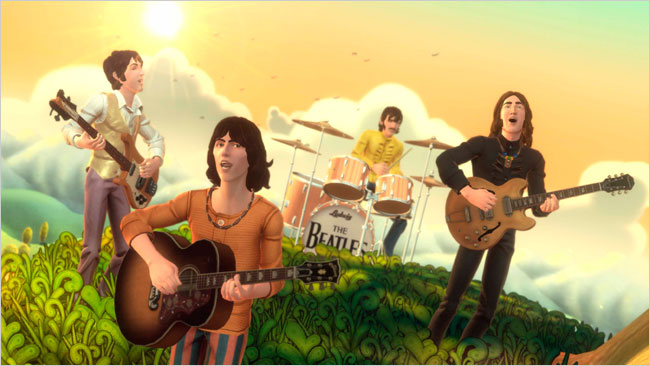
THERE may be no better way to bait a baby boomer than to be anything less than totally reverential about the Beatles. So the news that the lads from Liverpool were taking fresh form in a video game (a video game!) called The Beatles: Rock Band struck some of the band’s acolytes as nothing less than heresy.

Luckily, Paul McCartney and Ringo Starr, along with the widows of George Harrison and John Lennon, seem to understand that the Beatles are not a museum piece, that the band and its message ought never be encased in amber. The Beatles: Rock Band is nothing less than a cultural watershed, one that may prove only slightly less influential than the band’s famous appearance on “The Ed Sullivan Show” in 1964. By reinterpreting an essential symbol of one generation in the medium and technology of another, The Beatles: Rock Band provides a transformative entertainment experience.

In that sense it may be the most important video game yet made.

Never before has a video game had such intergenerational cultural resonance. The weakness of most games is that they are usually devoid of any connection to our actual life and times. There is usually no broader meaning, no greater message, in defeating aliens or zombies, or even in the cognitive gameplay of determining strategy or solving puzzles.

Previous titles in the Rock Band and Guitar Hero series have already done more in recent years to introduce young people to classic rock than all the radio stations in the country. But this new game is special because it so lovingly, meticulously, gloriously showcases the relatively brief career of the most important rock band of all time. The music and lyrics of the Beatles are no less relevant today than they were all those decades ago, and by reimagining the Beatles’ message in the unabashedly modern, interactive, digital form of now, the new game ties together almost 50 years of modern entertainment.

With all due respect to Wii Sports, no video game has ever brought more parents together with their teenage and adult children than The Beatles: Rock Band likely will in the months and years to come.

One Friday evening last month I invited a gaggle of 20-something hipsters (I’m 36) to my apartment in Williamsburg, Brooklyn, to try the game. After 15 minutes one 25-year-old said, “I’m going to have to buy this for my parents this Christmas, aren’t I?” After nine hours we had completed all of the game’s 45 songs in one marathon session. On Saturday afternoon, I woke up to watch a 20-year-old spend three hours mastering the rolling, syncopated drum sequences in “Tomorrow Never Knows.” Thirty-six hours later, near dawn Monday morning, there were still a few happy stragglers in my living room belting out “Back in the U.S.S.R.” Good thing my neighbors were away for the weekend.

I grew up in Woodstock, N.Y., steeped in classic rock, so I had a head start on my younger band mates. (I suspect many parents will enjoy having a similar leg up on their progeny.) Yet I watched the same transformation all weekend long. We would start a song like “Something” or “While My Guitar Gently Weeps,” and as it began, they would say, “Oh yeah, that one.” Then at the end there would literally be a stunned silence before someone would say something unprintable, or simply “Wow” as they fully absorbed the emotional intensity and almost divine melodies of the Beatles.

Not only was the game serving to reintroduce this music, but by leading the players through a schematic version of actually creating the songs, it was also doing so in a much more engaging way than merely listening to a recording. It is an imperfect analogy, but listening to a finished song is perhaps like being served a finished recipe: you know it tastes great even if you have no sense of how it was created.

By contrast, playing a music game like Rock Band is a bit closer to following a recipe yourself or watching a cooking show on television. Sure, the result won’t be of professional caliber (after all, you didn’t go to cooking school, the equivalent of music lessons), but you may have a greater appreciation for the genius who created the dish than the restaurantgoer, because you have attempted it yourself.

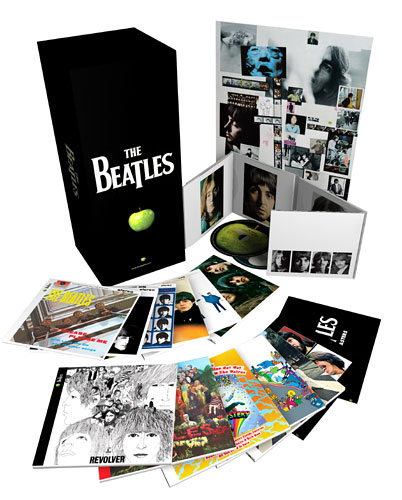
Previous music games have been about collections of songs. The Beatles: Rock Band is about representing and reoffering an entire worldview encapsulated in music. The developers at Harmonix Music Systems have translated the Beatles’ scores and tablature into a form that is accessible while also conveying the visceral rhythm of the music. In its melding of source material and presentation, The Beatles: Rock Band is sheer pleasure. The game is scheduled to be released by MTV Games for the PlayStation 3, Wii and Xbox 360 consoles on Wednesday, the same day the remastered Beatles catalog is slated to be released on CD.

Mechanically it is almost identical to previous Rock Band games. One player sings into a microphone, replacing the original lead vocals, while another plays an electronic drum kit and two more play ersatz guitar and bass. (The new game supports up to two additional singers for a potential maximum of six players.)

In the game’s story line mode, players inhabit the various Beatles as they progress from the Cavern Club to Ed Sullivan’s stage; Shea Stadium; the Budokan in Japan; Abbey Road; and their final appearance on the Apple Corps roof in 1969. Unlike in previous Rock Band games, players are not booed off the virtual stage for a poor performance; rather the screen cuts to a declarative “Song failed” message. Previously unreleased studio chatter provides a soundtrack for some of the menu and credits screens, but there is no direct interaction with avatars of John, Paul, George or Ringo.

The colorful psychedelic dreamscapes used to represent the band’s in-studio explorations are particularly evocative, though they serve mostly to entertain onlookers rather than the players themselves (who will be concentrating on getting the music right rather than looking at the pretty pictures).

Of course almost nothing could be more prosaic than pointing out that playing a music game is not the same as playing a real instrument. Yet there is something about video games that seems to inspire true anger in some older people.

Why is that? Is there still really a fear that a stylized representation of reality detracts from reality itself? In recent centuries every new technology for creating and enjoying music — the phonograph, the electric guitar, the Walkman, MTV, karaoke, the iPod — has been condemned as the potential death of “real” music.

But music is eternal. Each new tool for creating it, and each new technology for experiencing it, only brings the joy of more music to more people. This new game is a fabulous entertainment that will not only introduce the Beatles’ music to a new audience but also will simultaneously bring millions of their less-hidebound parents into gaming. For that its makers are entitled to a deep simultaneous bow, Beatles style.

[From New York Times article “All Together Now: Play the Game, Mom“]

confidence in what we cannot help being

According to Frankfurt, self-preservation is the “protean mode of concern” – the basis from which we make decisions. This self-preservation is “not itself grounded in reason, but love.” When Frankfurt talks about love here, he’s not referring to romance or lust or any of those common definitions, but rather to a “mode of caring” that is involuntary and not rationally determined. The object can be, among other things, a person, an ideal, a group.

So, because an individual is invested in this love, and because this love is non-utilitarian, it necessarily provides a basis for deciding what to care about. Frankfurt sees this in an evolutionary schema-it requires a “confidence in what we cannot help being.”

“It’s important to you to understand what’s important to you,” said Frankfurt.

[From “On college, bullshit and love” by Naimh Wallace]