American Religion

No Western nation is as religion-soaked as ours, where nine out of ten of us love God and are loved by him in return. That mutual passion centers our society and demands some understanding, if our doom-eager society is to be understood at all.

— Harold Bloom, The American Religion

Extreme and bizarre religious ideas are so commonplace in American history that it is difficult to speak of them as fringe at all. To speak of a fringe implies a mainstream, but in terms of numbers, perhaps the largest component of the religious spectrum in contemporary America remains what it has been since colonial times: a fundamentalist evangelicalism with powerful millenarian strands. The doomsday theme has never been far from the center of religious thought. The nation has always had believers who responded to this threat by a determination to flee from the wrath to come, to separate themselves from the City of Destruction, even if that meant putting themselves at odds with the law and with their communities or families. . . . We can throughout American history find select and separatist groups who looked to a prophetic individual claiming divine revelation, in a setting that repudiated conventional assumptions about property, family life, and sexuality. They were marginal groups, peculiar people, people set apart from the world: The Shakers and the Ephrata community, the communes of Oneida and Amana, the followers of Joseph Smith and Brigham Young.

— Philip Jenkins, Mystics and Messiahs

There is a dark side to religious devotion that is too often ignored or denied. As a means of motivating people to be cruel or inhumane — as a means of inciting evil, to borrow the vocabulary of the devout — there may be no more potent force than religion.

— Jon Krakauer, Under the Banner of Heaven

And it shall come to pass that I, the Lord God, will send one mighty and strong, holding the scepter of power in his hand, clothed with light for a covering, whose mouth shall utter words, eternal words; while his bowels shall be a fountain of truth, to set in order the house of God.

The Doctrine and Covenants, Section 85
Revealed to Joseph Smith on November 27, 1832

Literary Culture

Just when the gods had ceased to be, and the Christ had not yet come, there was a unique moment in history, between Cicero and Marcus Aurelius, when man stood alone.

— Gustave Flaubert

What was the best time and place to be alive?

By Patrick Dillon
MoreIntelligentLife

Making his own choice of the best time to have been alive, Edward Gibbon, author of “Decline and Fall of the Roman Empire” (1776-89), didn’t have much doubt. “If a man were called to fix the period in the history of the world during which the condition of the human race was most happy and prosperous, he would, without hesitation, name that which elapsed from the death of Domitian to the accession of Commodus.” This was the second century AD, when Rome’s “five good emperors”, Nerva, Trajan, Hadrian, Antoninus Pius and Marcus Aurelius, brought a peace and stability that western Europe would—in Gibbon’s view—never see again. But maybe it was an easier question then. Gibbon was white, smart and male. He could walk from the right end of one hierarchical society into another without a tremor. Nor was he sacrificing much technology to do so. Barring gunpowder and the printing press, his world and Hadrian’s were close enough to let Gibbon swap breeches for a toga and barely notice the difference.


For us, the question needs a little more thought. Anyone who dislikes pain, prefers their operations under anaesthetic, and has no wish to die of smallpox, might well choose to live now. We can balance that by awarding ourselves perpetual good health, but it’s harder to level the playing field when it comes to gender. Not many modern women, however frustrated with their lot, would choose to go back to long skirts, tight corsets and a general assumption that they are stupid. The same may apply to any European who isn’t white, and to anyone in the less affluent three-quarters of society. My children once went on a school trip to Apsley House, the Duke of Wellington’s home. I thought they were going to learn about lords; instead they were taught what it was like being a servant. Transport most of us to ancient Rome and we’ll find ourselves in a poorhouse or slave barracks. To give our question a chance, we have to assume that we can do our time travel, if not first-class, then in premium economy, switching genders if we feel like it, to land somewhere moderately comfortable.


This isn’t a question about technology, where the present will always trump the past. It’s about lifestyle and ideas, people and manners, things that ebb and flow. Armed with a passport to the good life in a time and place of our choice, not many will pass on the journey. Culture-vultures will book their seats in Shakespeare’s Globe in 1599 or the Cotton Club, Harlem, in the 1920s. Hero-worshippers will queue up to watch Michelangelo chisel stone in 1501 or Genghis Khan ride into battle in 1206. Epicures, the most prudent time-travellers, will follow Gibbon to Rome, or time their birth to dodge a call-up for the world wars and surf the Pax Americana.


Peace and stability are all very well, but several of mankind’s giant leaps have come in times of war. Democracy got going, and conversation buzzed, in Athens in the fifth century BC, with the Peloponnesian war raging outside. I’d brave the 16th-century Wars of Religion to catch the Reformation, or the Thirty Years War (1618-48) to watch the Enlightenment dawn. What I’m after is a sense of possibility. There’s a striking moment at the start of Thucydides’ “Peloponnesian War” when he surveys Greek history up to then. The striking part is, it only lasts a couple of pages. History is still on Series One. And maybe that sense of freshness is why the present doesn’t hold all the cards. Our own excitement in the rich, free West seems to have leaked away. A third of us can’t be bothered to use the votes Libyans are dying for. We have freed slaves, empowered women, shaken off tyrants. We should be living happily ever after, yet we’re not. Reason enough to tack against time and find a place where the future hasn’t gone stale.


It’s tempting to go by what you might witness—Socrates arguing with Plato in Athens, their contemporary Confucius riding through China, or Julius Caesar tangling with Cicero in 50BC Rome. But that would just be time tourism.


The Byzantine empire at its height would be hard to beat for other-worldly glitter, but the power of church and emperor rules it out. Knights on horseback put the Middle Ages out of bounds as far as I’m concerned. Of all the Renaissance states, Vicenza in the 16th century stands out, with Palladio to build you a villa and a chance to studio-crawl round some of the Venetian artists who fill our museums today. Amsterdam in the golden age of the 17th century also comes close, but that’s putting a lot of weight on culture, and we need something broader. The French ancien régime is almost appealing enough to mute my objection to absolute monarchs. Talleyrand, the sly politician who grew up under it and survived the twists and turns of its demise, maintained that “anyone who hasn’t lived in the 18th century before the revolution does not know the sweetness of living.”


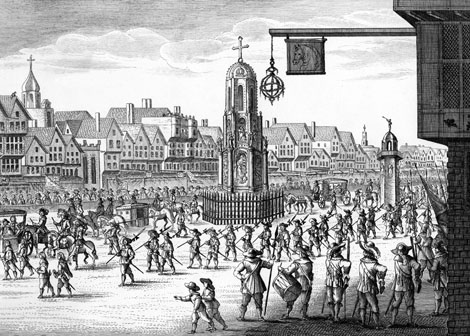
Part of the challenge is that we’re not just looking for a single charismatic moment. Places exist in time. What have the old people seen? What’s in store for the children? We’re looking for a turning point, a place living through changes whose effects are with us still. Which brings us to London in the 1690s, just after the Glorious Revolution that drove James II from his throne in a coup led by Prince William of Orange.


This London has a back story as rich as its potential. Its old people might have shaken the hand of Shakespeare, as well as surviving two civil wars; their grandchildren will die in the capital of a global empire. Around them, a whole new world is taking shape. At Jonathan’s coffee house, you can watch the stockmarket being born; insurance is being invented at Lloyd’s, and the new Bank of England is laying the foundations of national finance. Walking down Cheapside, you can buy an uncensored newspaper or stop to pray in a chapel of your choice. Your father couldn’t do either. Parliament has just begun a continuous tradition of government that will last for centuries. In the bookshops around Westminster Hall, you can buy Isaac Newton’s “Principia” warm off the press, as well as economic texts that talk for the first time about supply and demand, the way money isn’t fixed in value, and why credit matters more than gold. And you may well understand what they are saying, because enlightenment disciplines are still young and connected enough for a generalist to grasp.


Leisure is thriving in 1690s London. Pleasure gardens are opening and French food is all the rage, swept in by Huguenot immigration. You can go to the first night of Vanbrugh’s “The Relapse”, or Purcell’s “The Fairy Queen”. Coffee houses are packed and the craic is good: the age of wits such as Steele and Addison is dawning. Fashion has arrived, and the Strand is full of luxury shops whose display windows are a novelty, as are most of the things they sell. Best of all, the walk across town takes far longer than it took your father because this is becoming the first monster metropolis. “When a man is tired of London, he is tired of life,” Samuel Johnson said 80 years later. You can watch his sparkling city take shape.


No one is celebrating yet. People are saying there’ll be another coup and the newfangled stockmarket will crash again. That’s all part of the charge. Things are happening in London—tolerance, freedom of the press and parliament, consumerism, scientific breakthroughs, economic transformation—that millions of people will still be benefiting from 320 years later. In the coffee house, they talk of the new mathematics for calculating probability. That’s what the insurance market is about, as well as the gambling craze that’s ruining aristocrats all over town: a whole new engagement with possibility, an understanding that the future isn’t going to be like the past. And that’s what draws me to London in the 1690s, despite the wigs, the quack doctors and the stink of coal smoke. The modern world is starting, and I want to be there.


Professor Bartholomew Von Simpson Presents: The Science of Technical Nameology, or, How to sound like an expert without really trying

a lurch of drunkards
a frenzy of psychopaths
a snide of gossips
a drab of accountants
a flatter of hairdressers
a slither of yes-men
a tremble of freshmen
a scrimp of landlords
a shallow of debutantes
an annoyance of mimes
a carp of critics
a gripe of actors
a bombast of politicians
a dribble of Republicans
a stubble of uncles
a bleak of pessimists
a slack of procrastinators
a drone of teachers
a groan of comedians
an ooze of network executives
a squelch of chaperones
a swaddle of  baby-sitters
a grumpy of principals
a deft of magicians
a chill of assassins
a scam of televangelists
a creep of thieves
a muddle of experts
a bawl of infants
a pester of perfectionists
a squint of astronomers
a cram of students
a shout of ventriloquists
a quagmire of bureaucrats
a drub of bullies
a primp of fashion models
a crimp of chiropractors
a cruller of dietitians
a briny of sailors
a chirp of cheerleaders
a gloat of millionaires
a prey of lawyers

— Matt Groening, Bart Simpson’s Guide to Life: a wee handbook for the perplexed

The kitten that found Orson Welles

Other people, so I have read, treasure memorable moments in their lives: the time one climbed the Parthenon at sunrise, the summer night one met a lonely girl in Central Park and achieved with her a sweet and natural relationship, as they say in books. I too once met a girl in Central Park, but it is not much to remember. What I remember is the time John Wayne killed three men with a carbine as he was falling to the dusty street in Stagecoach, and the time the kitten found Orson Welles in the doorway in The Third Man.

— Walker Percy, The Moviegoer

But I don’t need no friends

I am just a poor boy
Though my story’s seldom told
I have squandered my resistance
For a pocket full of mumbles such are promises
All lies and jests
Still a man hears what he wants to hear
And disregards the rest

When I left my home and my family
I was no more than a boy
In the company of strangers
In the quiet of the railway station running scared
Laying low, seeking out the poorer quarters
Where the ragged people go
Looking for the places only they would know

Lie la lie …

Asking only workman’s wages
I come looking for a job
But I get no offers,
Just a come-on from the whores on Seventh Avenue
I do declare, there were times when I was so lonesome
I took some comfort there

Lie la lie …

Then I’m laying out my winter clothes
And wishing I was gone
Going home
Where the New York City winters aren’t bleeding me
Bleeding me, going home

In the clearing stands a boxer
And a fighter by his trade
And he carries the reminders
Of ev’ry glove that layed him down
Or cut him till he cried out
In his anger and his shame
“I am leaving, I am leaving”
But the fighter still remains

Lie la lie …

Hang around, Willie Boy
Don’t you raise the sails anymore
It’s for sure, I’ve spent my whole life at sea
And I’m pushin’ age seventy three
Now there’s only one place that was meant for me

Oh, to be home again
Down in old Virginny
With my very best friend
They call him Ragtime Willie
We’re gonna soothe away the rest of our years
We’re gonna put away all of our tears
That big rockin’ chair won’t go nowhere

Slow down, Willie Boy
Your heart’s gonna give right out on you
It’s true, and I believe I know what we should do
Turn the stern and point to shore
The seven seas won’t carry us no more

Oh, to be home again
Down in old Virginny
With my very best friend
They call him Ragtime Willie
I can’t wait to sniff that air
Dip’n snuff, I won’t have no care
That big Rockin’ Chair won’t go nowhere

Hear the sound, Willie Boy
The Flyin’ Dutchman’s on the reef
It’s my belief
We’ve used up all our time
This hill’s to steep to climb
And the days that remain ain’t worth a dime

Oh, to be home again
Down in old Virginny
With my very best friend
They call him Ragtime Willie
Would-a-been nice just t’see the folks
listen once again to the stale jokes
That big Rockin’ Chair won’t go nowhere

I can hear something calling on me
And you know where I want to be
Oh Willie don’t you hear that sound
Oh to be home again down in old Virginny
I just want to get my feet back on the ground
Oh to be home again down in old Virginny
I’d love to see my very best friend
They call him Rag-time Willie
I believe old rockin chair’s got me
Oh to be home again

Dirty old river, must you keep rolling
Flowing into the night
People so busy, makes me feel dizzy
Taxi light shines so bright
But I don’t need no friends
As long as I gaze on Waterloo sunset
I am in paradise

Every day I look at the world from my window
But chilly, chilly is the evening time
Waterloo sunset’s fine

Terry meets Julie, Waterloo Station
Every Friday night
But I am so lazy, don’t want to wander
I stay at home at night
But I don’t feel afraid
As long as I gaze on Waterloo sunset
I am in paradise

Every day I look at the world from my window
But chilly, chilly is the evening time
Waterloo sunset’s fine

Millions of people swarming like flies ’round Waterloo underground
But Terry and Julie cross over the river
Where they feel safe and sound
And they don’t need no friends
As long as they gaze on Waterloo sunset
They are in paradise

Waterloo sunset’s fine

For him that stealeth, or borroweth and returneth not, this book from its owner

let it change into a serpent in his hand and rend him. Let him be struck with palsy, and all his members blasted. Let him languish in pain crying aloud for mercy, and let there be no surcease to his agony till he sing in dissolution. Let bookworms gnaw his entrails in token of the Worm that dieth not, and when at last he goeth to his final punishment, let the flames of Hell consume him forever.

— Leila Avrin, Scribes, Script and Books: The Book Arts from Antiquity to the Renaissance

Raising a flag over the Reichstag


“Raising a flag over the Reichstag” – the famous photograph by Yevgeny Khaldei, taken on May 2, 1945. The photo shows Soviet soldiers raising the flag of the Soviet Union on top of the German Reichstag building following the Battle of Berlin. The moment was actually a re-enactment of an earlier flag-raising, and the photo was embroiled in controversy over the identities of the soldiers, the photographer, and some significant photo editing.

The Atlantic


Read like it’s 50 B.C.E

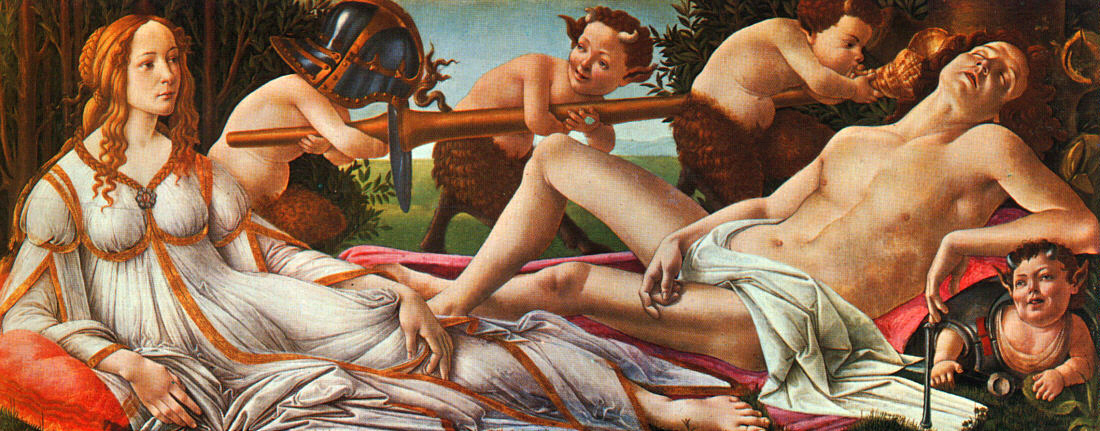
Mother of Rome, delight of Gods and men, 
Dear Venus that beneath the gliding stars 
Makest to teem the many-voyaged main 
And fruitful lands- for all of living things 
Through thee alone are evermore conceived, 
Through thee are risen to visit the great sun- 
Before thee, Goddess, and thy coming on, 
Flee stormy wind and massy cloud away, 
For thee the daedal Earth bears scented flowers, 
For thee waters of the unvexed deep 
Smile, and the hollows of the serene sky 
Glow with diffused radiance for thee!

— Lucretius, On the Nature of Things
Proem

De rerum

First, goddess, the birds of the air, pierced to the heart with your powerful shafts, signal your entry. Next wild creatures and cattle bound over rich pastures and swim rushing rivers: so surely are they all captivated by your charm, and eagerly follow your lead. Then you inject seductive love into the heart of every creature that lives in the seas and mountains and river torrents and bird-haunted thickets, implanting in it the passionate urge to reproduce its kind.

— Lucretius, On the Nature of Things
Martin Ferguson Smith tr.

Young Night Thought

All night long and every night,
When my mamma puts out the light,
I see the people marching by,
As plain as day, before my eye.

Armies and emperors and kings,
All carrying different kinds of things,
And marching in so grand a way,
You never saw the like by day.

So fine a show was never seen
At the great circus on the green;
For every kind of beast and man
Is marching in that caravan.

At first they move a little slow
But still the faster on they go,
And still beside them close I keep
Until we reach the town of sleep.

— Robert Louis Stevenson, A Child’s Garden of Verses

Drest in a little brief authority

It is all a matter of the moment’s  mores,
Of words on wood pulp, of radios roaring,
Of Communist kindergartens or first communions.
Only in the knowledge of his own Essence
Has any man ceased to be many monkeys.

— Aldous Huxley, Ape and Essence

In her cheeks the dimples emerge from the long hibernation of her sorrow.

Most ignorant of what he is most assured, our poor friend doesn’t know.