Fuck them is what I say. I hate those e-books. They cannot be the future. They may well be. I will be dead. I won’t give a shit.
— Maurice Sendak
RIP


Fuck them is what I say. I hate those e-books. They cannot be the future. They may well be. I will be dead. I won’t give a shit.
— Maurice Sendak
RIP
.
.
.
.
.
.
.
.
Enlightenment is man’s emergence from his self-incurred immaturity. Immaturity is the inability to use one’s own understanding without the guidance of another. This immaturity is self-incurred if its cause is not lack of understanding, but lack of resolution and courage to use it without the guidance of another. The motto of enlightenment is therefore: Sapere aude! Have courage to use your own understanding! . . .
Laziness and cowardice are the reasons why such a large proportion of men, even when nature has long emancipated them from alien guidance, nevertheless gladly remain immature for life. For the same reasons, it is all too easy for others to set themselves up as their guardians. It is so convenient to be immature! If I have a book to have understanding in place of me, a spiritual adviser to have a conscience for me, a doctor to judge my diet for me, and so on, I need not make any efforts at all. I need not think, so long as I can pay; others will soon enough take the tiresome job over for me.
— Immanuel Kant, “What is Enlightenment?” (1784)
Parents, in my opinion, have to be finessed, thought around, even as we love them: They are so colossally wrong about so many important things. And even when they are not, paradoxically, even when they are 100 percent right, the imperative remains the same: To live an “adult” life, a meaningful life, it is necessary, I would argue, to engage in a kind of symbolic self-orphaning. The process will be different for every person. I have my own inspirational cast of characters in this regard, a set of willful, heroic self-orphaners, past and present, whom I continue to revere: Mozart, the musical child prodigy who successfully rebelled against his insanely grasping and narcissistic father (Leopold Mozart), who for years shopped him around the courts of Europe as a sort of family cash cow; Sigmund Freud, who, by way of unflinching self-analysis, discovered that it was possible to love and hate something or someone at one and the same time (mothers and fathers included) and that such painfully “mixed emotion” was also inescapably human; Virginia Woolf, who in spite of childhood loss, mental illness, and an acute sense of the sex-prejudice she saw everywhere around her, not only forged a life as a great modernist writer, but made her life an incorrigibly honest and vulnerable one.
In a journal entry from 1928 collected in A Writer’s Diary, Woolf wrote the following (long after his death) about her brilliant, troubled, well-meaning, tyrannical, depressive, enormously distinguished father—Sir Leslie Stephen, model for Mr. Ramsay in To the Lighthouse and one of the great English “men of letters” of the 19th century:
Father’s birthday. He would have been 96, 96, yes, today; and could have been 96, like other people one had known: but mercifully was not. His life would have entirely ended mine. What would have happened? No writing, no books—inconceivable. …
The sentimental pathology of the American middle-class family—not to mention the mind-warping digitalization of everyday life—usually militates against such ruthless candor. But what the Life of the Orphan teaches—has taught me at least—is that it is indeed the self-conscious abrogation of one’s inheritance, the “making strange” of received ideas, the cultivation of a willingness to defy, debunk, or just plain old disappoint one’s parents, that is the absolute precondition, now more than ever, for intellectual and emotional freedom.
— Terry Castle, “Why kids need to separate from their parents“

Talking in bed ought to be easiest,
Lying together there goes back so far,
An emblem of two people being honest.
Yet more and more time passes silently.
Outside, the wind’s incomplete unrest
Builds and disperses clouds about the sky,
And dark towns heap up on the horizon.
None of this cares for us. Nothing shows why
At this unique distance from isolation
It becomes still more difficult to find
Words at once true and kind,
Or not untrue and not unkind.
— Philip Larkin, The Whitsun Weddings
By Leonard Cassuto
wsj
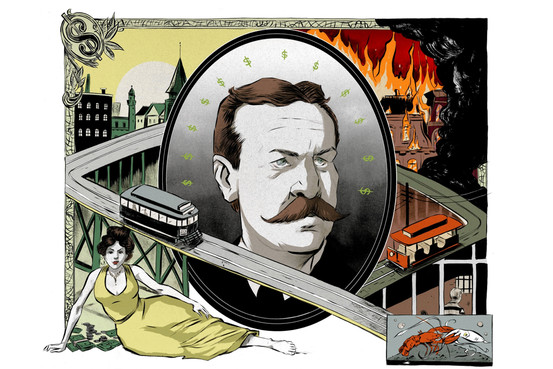
We remember Theodore Dreiser mainly for his deeply felt tales of have-nots who yearn for much more than the world gives them. In “An American Tragedy,” his 1925 masterpiece, a young man’s longing for money and social standing leads him to the electric chair. But Mr. Dreiser also wrote admiringly of the wealthy, and this year marks the 100th anniversary of “The Financier,” his sweeping and minutely observed story of an enormously successful capitalist.
“The Financier” centers on Frank Algernon Cowperwood, whom the author repeatedly describes as possessing “force.” Cowperwood proves himself both skilled and resilient in the financial marketplace. He also keeps a cool head when he’s discovered sleeping with his business partner’s daughter. Mr. Dreiser so insistently interleaves stock-market intrigue with sex, in fact, that one critic described Cowperwood’s story as a club sandwich of “slices of business alternating with erotic episodes.”
But Cowperwood is no Gordon Gekko. He’s suave, not rapacious. And unlike Gekko, who celebrates greed, Cowperwood asserts simply, “I satisfy myself.”
Mr. Dreiser drew Cowperwood from life—specifically, the life of Charles Tyson Yerkes, one of the more freewheeling Gilded Age robber barons. Mr. Yerkes made his fortune in municipal rapid transit, but before he started buying up cable-car companies he was a stock and bond broker and speculator.
Mr. Dreiser fictionalizes Mr. Yerkes’s personality, but follows his business life closely in the novel. The result is an amazingly intricate description of high-rolling 19th-century finance.
Cowperwood practices a situational morality that “varies with conditions, if not climates.” Invited into shady parley with the Philadelphia city treasurer, he cuts a backroom deal that anoints him an investment banker for the city, allowing him to speculate with the city’s short-term loan issues. Although he does so prudently, investing in local street railways (the rapid transit of the time), he gets caught short when the Great Chicago Fire of 1871 triggers a run on his secret holdings before the usual end-of-month settlement. Thus exposed, Cowperwood and the treasurer are convicted of embezzlement and sent to prison.
Mr. Dreiser’s detailed account of these machinations, and of the financier’s imprisonment, are drawn faithfully from the historical record. But the novelist imagines a scene when the young lover of the adulterous Cowperwood comes to visit him in the penitentiary and the chastened financier weeps in her arms.
From this low point, Mr. Dreiser’s hero soon regains his financial and emotional dominance. Pardoned after 13 months, he re-enters the financial fray on a smaller scale. He quickly becomes rich again when he leverages a stake of $75,000 into more than $1 million over a few days. Acting aggressively in a stricken market, he shorts the stocks of companies related to the firm of Jay Cooke, whose spectacular failure to complete a transcontinental railroad led to what became known as the Panic of 1873. Here again, Mr. Dreiser barely fictionalizes the real-life maneuvers of Mr. Yerkes. Mr. Dreiser follows Cowperwood’s further adventures in the Windy City in “The Titan” (1914), the second volume of what would eventually become his “Trilogy of Desire.”
Desire was Mr. Dreiser’s lifelong subject. His fascination with what people want—and what keeps them wanting, and how their social situations shape what they want—forms the through-line that connects all of his books. Cowperwood gets just about everything he wants, but it is Mr. Dreiser’s constant probing of the intertwined needs for money, art, glory, sex and so much else that makes “The Financier” the greatest of all American business novels.
But what makes Cowperwood want? Mr. Dreiser imagines a scene in which young Cowperwood witnesses a lobster and a squid caged together in a fishmonger’s tank. Over several days, he observes the squid getting more and more ragged, with pieces of it “snapped off” until it finally falls prey to the lobster’s relentless pursuit. Critics have made a lot of this spectacle, mostly reading it as a primal scene that answers for Cowperwood a question that Mr. Dreiser never stopped asking: How is life organized? But no one pays attention to what follows the underwater drama. The boy runs home to tell his parents about what he’s seen, but they show no concern. “What makes you take interest in such things?” asks his mother, while his father reacts “indifferently.”
Joining the lobster-squid drama together with its family aftermath allows us to view Cowperwood as a man-child of desire. His insatiable acquisitiveness—which extends to his love life—extends likewise from his understanding that “things lived on each other,” and also from a desire to gain approval from others by demonstrating his prowess on an increasingly grander scale.
It also helps to account for his weeping in prison. Mr. Dreiser portrays Cowperwood, for all of his bland and ruthless competence, as someone who needs sympathy. In this respect he is perhaps not so different from Dreiser characters like the pitiful George Hurstwood of “Sister Carrie” (1900) or the pathetically striving Clyde Griffiths of “An American Tragedy.”
Mr. Dreiser’s novels describe in unparalleled detail the myriad industrial, technological and social changes in the U.S. at the turn of the last century. “The Financier” has aged gracefully not least because Cowperwood’s world remains familiar. Readers will recognize the contours of today’s financial markets in Mr. Dreiser’s story (and a new edition of “The Financier,” from the University of Illinois Press, restores descriptions of Cowperwood’s financial dealings that Mr. Dreiser cut for the novel’s 1927 rerelease). Today’s readers will also spot some familiar tensions: It’s not a far leap from the causes of Cowperwood’s Philadelphia downfall to a discussion of how much transparency should be required in, say, the market for credit-default swaps.
Mr. Yerkes eventually wound down, dying short of his dearest triumph, a planned consolidation of London’s transit system. Perhaps because of this real-life anticlimax, Mr. Dreiser spent many years trying to close Cowperwood’s story. He worked on the final volume of the trilogy, “The Stoic,” until he died in 1945. (The novel was released posthumously in 1947.) “The Financier” hints at no such hesitation. The novel instead unveils one of Mr. Dreiser’s most energetic and accomplished characters in the early stages of his ascent, in a financial arena whose basic rules—and players—have changed but little.
It is with the reading of books the same as with looking at pictures; one must, without doubt, without hesitations, with assurance, admire what is beautiful.
— Vincent van Gogh
These bloody days have broken my heart.
My lust, my youth did them depart.
— Thomas Wyatt
By Augusten Burroughs
wsj
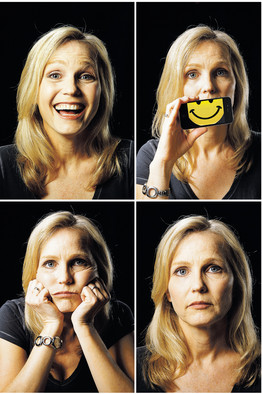
“I just want to be happy.”
I can’t think of another phrase capable of causing more misery and permanent unhappiness. With the possible exception of, “Honey, I’m in love with your youngest sister.”
In our super-positive society, we have a zero-tolerance policy for negativity. But who feels ‘Great!’ all the time?
Yet at first glance, it seems so guileless. Children just want to be happy. So do puppies. Happy seems like a healthy, normal desire. Like wanting to breathe fresh air or shop only at Whole Foods.
But “I just want to be happy” is a hole cut out of the floor and covered with a rug. Because once you say it, the implication is that you’re not. The “I just want to be happy” bear trap is that until you define precisely, just exactly what “happy” is, you will never feel it. Whatever being happy means to you, it needs to be specific and also possible. When you have a blueprint for what happiness is, lay it over your life and see what you need to change so the images are more aligned.
Still, this recipe of defining happiness and fiddling with your life to get it will work for some people—but not for others. I am one of the others. I am not a happy person. There are things that do make me experience joy. But joy is a fleeting emotion, like a very long sneeze. A lot of the time what I feel is, interested. Or I feel melancholy. And I also frequently feel tenderness, annoyance, confusion, fear, hopelessness. It doesn’t all add up to anything I would call happiness. But what I’m thinking is, is that so terrible?
I know a physicist who loves his work. People mistake his constant focus and thought with unhappiness. But he’s not unhappy. He’s busy. I bet when he dies, there will be a book on his chest. Happiness is a treadmill of a goal for people who are not happy by nature. Being an unhappy person does not mean you must be sad or dark. You can be interested, instead of happy. You can be fascinated instead of happy.
The barrier to this, of course, is that in our super-positive society, we have an unspoken zero-tolerance policy for negativity. Beneath the catchall umbrella of negativity is basically everything that isn’t super-positive. Seriously, who among us is having a “Great!” day every day? Who feels “Terrific, thanks!” all the time?
Anger and negativity have their uses, too. Instead of trying to alleviate some of the uncomfortable and unpleasant emotions you feel by “trying to be positive,” try being negative instead. Seriously, try it sometime. This will help you get in touch with how you actually feel: “I feel hopeless and fat and stupid. And like a failure for feeling this way. And trying to be positive and upbeat makes me feel angry and feeling angry makes me feel like I am broken.”
If that’s how you feel—however you feel—then you have a base line, you have established a real solid floor of reference. Sometimes just giving yourself permission to feel any emotion without judgment or censorship can lessen the intensity of those negative emotions. Almost like you’re letting them out into the backyard to run around and get rid of some of that energy.
A corollary to the idea that we must all be happy and positive all the time is that we must all be “healed.” When I was 32, somebody I loved died on a plastic-covered twin mattress at a Manhattan hospital. His death was not unexpected and I had prepared myself years in advance, as though studying for a degree. When he died, I was as stunned as if he had been killed by a grand piano falling from the top of a building. I was fully unprepared.
I did not know what to do with my physical self. It took me about a year to stop thinking, madly, I might somehow meet him in my sleep. Once I finally believed he was gone, I began the next stage: waiting. Waiting to heal. This lasted several years.
The truth about healing is that heal is a television word. Someone close to you dies? You will never heal. What will happen is, for the first few days, the people around you will touch your shoulder and this will startle you and remind you to breathe. You will feel as though you will soon be dead from natural causes; the weight of the grief will be physical and very nearly unbearable.
Eventually, you will shower and leave the house. Maybe in a year you will see a movie. And one day somebody will say something and it will cause you to laugh. And you will clamp your hand over your mouth because you laughed and that laugh will break your heart, it will feel like a betrayal. How can you laugh?
In time, to your friends, you will appear to have recovered from your loss. All that really happened, you’ll think, is that the hole in the center of your life has narrowed just enough to be concealed by a laugh. And yet, you might feel a pressure for it to be true. You might feel that “enough” time has passed now, that the hole at the center of you should not be there at all.
But holes are interesting things. As it happens, we human beings are able to live just fine with many holes of many sizes and shapes. Pleasure, love, compassion, fulfillment; these things do not leak out of holes of any size. So we can be filled with holes and loss and wide expanses of unhealed geography—and we can also be excited by life and in love and content at the exact same moment.
This is among the oldest, deepest, most primal truths: The facts of life may be, at times, unbearably painful. But the core, the bones of life are generous beyond all reason or belief. Those things which ought to kill us do not. This should be taken as encouragement to continue.
The truth about healing is that you don’t need to heal to be whole. And by whole, I mean damaged, missing pieces of who you were, your heart—missing what feels like some of your most important parts. And yet, not missing any part of you at all. Being, in truth, larger than you were before.
Human experience weighs more than human tissue.
By Ian Leslie
moreintelligentlife

It was the fifth set of a semi-final at last year’s US Open. After four hours of epic tennis, Roger Federer needed one more point to see off his young challenger, Novak Djokovic. As Federer prepared to serve, the crowd roared in anticipation. At the other end, Djokovic nodded, as if in acceptance of his fate.
Federer served fast and deep to Djokovic’s right. Seconds later he found himself stranded, uncomprehending, in mid-court. Djokovic had returned his serve with a loose-limbed forehand of such lethal precision that Federer couldn’t get near it. The nonchalance of Djokovic’s stroke thrilled the crowd. John McEnroe called it “one of the all-time great shots”.
Djokovic won the game, set, match and tournament. At his press conference, Federer was a study in quiet fury. It was tough, he said, to lose because of a “lucky shot”. Some players do that, he continued: “Down 5-2 in the third, they just start slapping shots …How can you play a shot like that on match point?”
Asked the same question, Djokovic smiled. “Yeah, I tend to do that on match points. It kinda works.”
Federer’s inability to win Grand Slams in the last two years hasn’t been due to physical decline so much as a new mental frailty that emerges at crucial moments. In the jargon of sport, he has been “choking”. This, say the experts, is caused by thinking too much. When a footballer misses a penalty or a golfer fluffs a putt, it is because they have become self-conscious. By thinking too hard, they lose the fluid physical grace required to succeed. Perhaps Federer was so upset because, deep down, he recognised that his opponent had tapped into a resource that he, an all-time great, is finding harder to reach: unthinking.
Unthinking is the ability to apply years of learning at the crucial moment by removing your thinking self from the equation. Its power is not confined to sport: actors and musicians know about it too, and are apt to say that their best work happens in a kind of trance. Thinking too much can kill not just physical performance but mental inspiration. Bob Dylan, wistfully recalling his youthful ability to write songs without even trying, described the making of “Like a Rolling Stone” as a “piece of vomit, 20 pages long”. It hasn’t stopped the song being voted the best of all time.
In less dramatic ways the same principle applies to all of us. A fundamental paradox of human psychology is that thinking can be bad for us. When we follow our own thoughts too closely, we can lose our bearings, as our inner chatter drowns out common sense. A study of shopping behaviour found that the less information people were given about a brand of jam, the better the choice they made. When offered details of ingredients, they got befuddled by their options and ended up choosing a jam they didn’t like.
If a rat is faced with a puzzle in which food is placed on its left 60% of the time and on the right 40% of the time, it will quickly deduce that the left side is more rewarding, and head there every time, thus achieving a 60% success rate. Young children adopt the same strategy. When Yale undergraduates play the game, they try to figure out some underlying pattern, and end up doing worse than the rat or the child. We really can be too clever for our own good.
By allowing ourselves to listen to our (better) instincts, we can tap into a kind of compressed wisdom. The psychologist Gerd Gigerenzer argues that much of our behaviour is based on deceptively sophisticated rules-of-thumb, or “heuristics”. A robot programmed to chase and catch a ball would need to compute a series of complex differential equations to track the ball’s trajectory. But baseball players do so by instinctively following simple rules: run in the right general direction, and adjust your speed to keep a constant angle between eye and ball.
To make good decisions in a complex world, Gigerenzer says, you have to be skilled at ignoring information. He found that a portfolio of stocks picked by people he interviewed in the street did better than those chosen by experts. The pedestrians were using the “recognition heuristic”: they picked companies they’d heard of, which was a better guide to future success than any analysis of price-earning ratios.
Researchers from Columbia Business School, New York, conducted an experiment in which people were asked to predict outcomes across a range of fields, from politics to the weather to the winner of “American Idol”. They found that those who placed high trust in their feelings made better predictions than those who didn’t. The result only applied, however, when the participants had some prior knowledge.
This last point is vital. Unthinking is not the same as ignorance; you can’t unthink if you haven’t already thought. Djokovic was able to pull off his wonder shot because he had played a thousand variations on it in previous matches and practice; Dylan’s lyrical outpourings drew on his immersion in folk songs, French poetry and American legends. The unconscious minds of great artists and sportsmen are like dense rainforests, which send up spores of inspiration.
The higher the stakes, the more overthinking is a problem. Ed Smith, a cricketer and author of “Luck”, uses the analogy of walking along a kerbstone: easy enough, but what if there was a hundred-foot drop to the street—every step would be a trial. In high-performance fields it’s the older and more successful performers who are most prone to choke, because expectation is piled upon them. An opera singer launching into an aria at La Scala cannot afford to think how her technique might be improved. When Federer plays a match point these days, he may feel as if he’s standing on the cliff edge of his reputation.
Professor Claude Steele, of Stanford, studies the effects of performance anxiety on academic tests. He set a group of students consisting of African-Americans and Caucasians a test, telling them it would measure intellectual ability. The African-Americans performed worse than the Caucasians. Steele then gave a separate group the same test, telling them it was just a preparatory drill. The gulf narrowed sharply. The “achievement gap” in us education has complex causes, but one may be that bright African-American students are more likely to feel they are representing their ethnic group, which leads them to overthink.
How do you learn to unthink? Dylan believes the creative impulse needs protecting from self-analysis: “As you get older, you get smarter, and that can hinder you…You’ve got to programme your brain not to think too much.” Flann O’Brien said we should be “calculatedly stupid” in order to write. The only reliable cure for overthinking seems to be enjoyment, something that both success and analysis can dull. Experienced athletes and artists often complain that they have lost touch with what made them love what they do in the first place. Thinking about it is a poor substitute.
We live in age of self-reflection, analysing every aspect of our work, micro-commentating on our own lives online, reading articles urging us to ponder what makes us happy. Much of this may be worthwhile, but we also need to put thinking in its place. Djokovic’s return was both the culmination of his life’s effort and an expression of careless joy. It kinda worked.
The Goettge patrol incident plus such Japanese tactics as playing dead and then throwing a grenade — or playing wounded, calling for a corpsman, and then knifing the medic when he came — plus the sneak attack on Pearl Harbor, caused the Marines to hate the Japanese intensely and to be reluctant to take prisoners.
The attitudes held toward the Japanese by noncombatants or even sailors or airmen often did not reflect the deep personal resentment felt by Marine infantrymen. Official histories and memoirs of Marine infantrymen written after the war rarely reflect that hatred. But at the time of battle, Marines felt it deeply, bitterly, and as certainly as danger itself. To deny this hatred or make light of it would be as much a lie as to deny or make light of the esprit de corps or the intense patriotism felt by the Marines with whom I served in the Pacific.
My experiences on Peleliu and Okinawa made me believe that the Japanese held mutual feelings for us. They were a fanatical enemy; that is to say, they believed in their cause with an intensity little understood by many postwar Americans — and possibly many Japanese, as well.
This collective attitude, Marine and Japanese, resulted in savage, ferocious fighting with no holds barred. This was not the dispassionate killing seen on other fronts or in other wars. This was a brutish, primitive hatred, as characteristic of the horror of war in the Pacific as the palm trees and the islands. To comprehend what the troops endured then and there, one must take into full account this aspect of the nature of the Marines’ war.
— E. B. Sledge, With the Old Breed
If I were called in
To construct a religion
I should make use of water.
Going to church
Would entail a fording
To dry, different clothes;
My liturgy would employ
Images of sousing,
A furious devout drench,
And I should raise in the east
A glass of water
Where any-angled light
Would congregate endlessly.
— Philip Larkin
It was a dark and stormy night; the rain fell in torrents — except at occasional intervals, when it was checked by a violent gust of wind which swept up the streets (for it is in London that our scene lies), rattling along the housetops, and fiercely agitating the scanty flame of the lamps that struggled against the darkness.
— Edward George Bulwer-Lytton, Paul Clifford (1830)
(post inspiration)
Poet professor in autumn years
seeks helpmate companion protector friend
young lover w/empty compassionate soul
exuberant spirit, straightforward handsome
athletic physique & boundless mind, courageous
warrior who may also like women&girls, no problem,
to share bed meditation apartment Lower East Side,
help inspire mankind conquer world anger & guilt,
empowered by Whitman Blake Rimbaud Ma Rainey & Vivaldi,
familiar respecting Art’s primordial majesty, priapic carefree
playful harmless slave or master, mortally tender passing swift time,
photographer, musician, painter, poet, yuppie or scholar
Find me here in New York alone with the Alone
going to lady psychiatrist who says Make time in your life
for someone you can call darling, honey, who holds you dear
can get excited & lay his head on your heart in peace.
— Allen Ginsberg
via toadustyshelfweaspire
By Jason Oberholtzer
thoughtcatalog
[1]
I stood on the balcony of a friend’s ninth-floor apartment in Boston last summer and talked about jumping. He had just finished convincing me that The Beatles would have been less successful with John Bonham as their drummer, so in return, I was convincing him that I knew why people put in high places think about the logistics of jumping, or why there exists that moment when, driving windy back roads at night, we are hit with the realization that it is within our power to put our bumper full speed into the nearest tree, or why we do advanced physics and why our legs tense when the train we are waiting for approaches.
“It comes down to power,” I told him. “At this moment, we face a choice. We have the power to effect great change immediately, but at the expense of the future. Let’s look at it as a gamble. There is before me an option to do something with immediate and enormous repercussions. It will impact the world, or at least my corner of it, more than any other action I have available to me at the moment. There will be the outpouring of grief, the hurt, the questions. The impact of my time alive will be clear, as it is defined by the legacy of my death. It is instant access to meaning, right there in front of me. Therefore, all morality of the decision aside, every time I don’t jump, I am choosing to believe that this sudden conclusion is not worth it. I’m betting that the aggregate impact of my life will be greater than the impact of ending it. And this has nothing to do with happiness or sadness or anything that took place before the moment I reached this railing. This is just being aware of your options, even when doing so makes you flinch. And it is more my body, driven by something primitive, that recognizes the options, that recoils even while advancing, drawn as to a Siren to … something. I’m not quite sure what. Okay, now we can pull morality back into it, at least as it pertains to my responsibility to other people. It’s not guilt that makes us think of others in this moment, nor is it some abstract morality. It is a gaze down at our chips. We count all those people we know, who we care about, who we love. We count our intellectual endeavors, the questions we want to answer. We count everything we know to be beautiful, all our aesthetic goals. We count all the mysteries that would end. We do this all in an instant and mash it all together into a sense of self. Here is what we have to wager. We then look to the future and weigh the unknown. We know there will be struggle and pain and sorrow and loss, because ultimately that one certainty in life vibrates through all previous events. We do not know what will happen to us or what our lives will mean in spite of this certainty. The same vivid imagination that is currently running through a checklist of muscles and driving my adrenaline, as I place my hand on this railing, takes our sense of self, then draws either from memories or predictions, from dreams, from art, from that primitive place, and creates for itself a home, right in the pits of our stomachs, where it can iterate. The future is born in our stomachs. Multiple futures. Visceral possibilities. And when this happens, I can’t help it and I fall in love with the future. I have no evidence that the pros will outweigh the cons; I can’t point to anything that suggests I will make an impact that I can intellectually stack up against the power I have at this very moment. But since when did love make sense? Standing up here, or driving those windy roads, or watching an approaching train, we gamble. We feel the power granted us at that moment, and our intellect and our emotions and our instincts all have their say. And the amazing, beautiful, possibly transcendent thing about humanity is that we almost always bet on ourselves.”
— An excerpt taken from “Vertigo,”
an essay found in
I Love Charts: The Book,
available now for pre-order.
At each stage, Teilkommandos were detached to identify, arrest, and execute potential opponents. Most of them, it should be said, were Jews. But we also shot Commissars or cadres of the Bolshevik Party, when we found them, thieves, looters, farmers who were hiding their grain, Gypsies too, Beck would have been happy. Von Radetzky had explained to us that we had to reason in terms of objective threat: since unmasking each and every guilty individual was impossible, we had to identify the sociopolitical categories most liable to cause us harm, and act accordingly.
— Jonathan Littell, The Kindly Ones

