Animals: some collective nouns

Green Dobermans

Cut open the dog head. Cup the pale green
brain. Its head is an avocado.
Take out its stone then the fork from your pocket.
Drag it over the muzzle. The blood runs out in ribbons
into the hair. Its dog-ribbon hair.
The dog-egg in the pan boils, barks through red
and endless dark, bubbles stars into light,
lies down inside my bitten ankles, ballerina tutus,
they dance away from me. Our sheets hang like lungs
on the washing line. Capillaries shoot blue, bark green
Dobermans through the streets
of Santiago. the size of small horses,
liquid lime, they run as zaps, snapping
the swinging tassels on my bag.

— Liz Adams

“Being a man”

But there is something about this narrative hectoring about men not understanding manhood that seems particularly brutal in that it specifically attacks them for emotional ineptitude while simultaneously attacking them for having emotions.

NPR

London logrollers

You made your great mistake when you abandoned the poetry business, and set up shop as a wizard in general practice. You wrote, in your day, some very good verse, and I had the pleasure, along with other literary buzzards, of calling attention to it at the time. But when you fell into the hands of those London logrollers, and began to wander through pink fogs with them, all your native common sense oozed out of you, and you set up a caterwauling for all sorts of brummagem Utopias, at first in the aesthetic region only but later in the regions of political and aesthetic baloney. Thus a competent poet was spoiled to make a tinhorn politician.

— H. L. Mencken, letter to Ezra Pound, Nov. 28, 1936

Dark Glasses

cacher / to hide

A deliberative figure: the amorous subject wonders, not whether he should declare his love to the loved being (this is not a figure of avowal), but to what degree he should conceal the turbulences of his passion: his desires, his distresses: in short, his excesses (in Racinian language: his fureur).

. . . A secondary anxiety seizes me, which is that I must determine the degree of publicity I shall give to my initial anxiety.

2.  I am caught up in a double discourse, from which I cannot escape. On the one hand, I tell myself: suppose the other, by some arrangement of his own structure, needed my questioning? Then wouldn’t I be justified in abandoning myself to the literal expression, the lyrical utterance of my “passion”? Are not excess and madness my truth, my strength? And if this truth, this strength ultimately prevailed?
But on the other hand, I tell myself: the signs of this passion run the risk of smothering the other. Then should I not, precisely because of my love, hide from the other how much I love him?  I see the other with a double vision: sometimes as object, sometimes as subject; I hesitate between tyranny and oblation. Thus I doom myself to blackmail: if I love the other, I am forced to seek his happiness; but then I can only do myself harm: a trap: I am condemned to be a saint or a monster: unable to be the one, unwilling to be the other: hence I tergiversate: I show my passion a little.

3.  To impose upon my passion the mask of discretion (of impassivity): this is a strictly heroic value: “It is unworthy of great souls to expose to those around them the distress they feel” (Clotilde de Vaux); Captain Paz, one of Balzac’s heroes, invents a false mistress in order to be sure of keeping his best friend’s wife from knowing that he loves her passionately.
Yet to hide a passion totally (or even to hide, more simply, its excess) is inconceivable: not because the human subject is too weak, but because passion is in essence made to be seen: the hiding must be seen: I want you to know that I am hiding something from you, that is the active paradox I must resolve: at one and the same time it must be known and not known: I want you to know that I don’t want to show my feelings: that is the message I address to the other. Larvatus prodeo: I advance pointing to my mask: I set a mask upon my passion, but with a discreet (and wily) finger I designate this mask. Every passion, ultimately, has its spectator: at the moment of his death, Captain Paz cannot keep from writing to the woman he has loved in silence: no amorous oblation without a final theater: the sign is always victorious.

4.  Let us suppose that I have wept, on account of some incident of which the other has not even become aware (to weep is part of the normal activity of the amorous body), and that, so this cannot be seen, I put on dark glasses to mask my swollen eyes (a fine example of denial: to darken the sight in order not to be seen). The intention of this gesture is a calculated one: I want to keep the moral advantage of stoicism, of “dignity” (I take myself for Clotilde de Vaux), and at the same time, contradictorily, I want to provoke the tender question (“But what’s the matter with you?”); I want to be both pathetic and admirable, I want to be at the same time a child and an adult. Thereby I gamble, I take a risk: for it is always possible that the other will simply ask no question whatever about these unaccustomed glasses; that the other will see, in fact, no sign.

5.  In order to suggest, delicately, that I am suffering, in order to hide without lying, I shall make use of a cunning preterition: I shall divide the economy of my signs. The task of the verbal signs will be to silence, to mask, to deceive: I shall never account, verbally, for the excesses of my sentiment. Having said nothing of the ravages of this anxiety, I can always, once it has passed, reassure myself that no one has guessed anything. The power of language: with my language I can do everything: even and especially say nothing.
I can do everything with my language, but not with my body. What I hide by my language, my body utters. I can deliberately mold my message, not my voice. By my voice, whatever it says, the other will recognize “that something is wrong with me.” I am a liar (by preterition), not an actor. My body is a stubborn child, my language is a very civilized adult . . .

— Roland Barthes, A Lover’s Discourse

The disquieting schoolgirl

Another peal of childish laughter broke out in the kitchen. Lady Hamilton at sixteen sounded as though she were about eleven. And yet how mature, how technically perfect had been the look with which she greeted Bob! Obviously, the most disquieting fact about Rosie was that she was simultaneously innocent and knowing, a calculating adventuress and a pigtailed schoolgirl.

— Aldous Huxley, Ape and Essence

To copy oneself

Success is dangerous. One begins to copy oneself, and to copy oneself is more dangerous than to copy others. It leads to sterility.

— Pablo Picasso
Forbes Quotes

Dear Borges

13 June 1996 New York

Dear Borges,

Since your literature was always placed under the sign of eternity, it doesn’t seem too odd to be addressing a letter to you. (Borges, it’s 10 years!) If ever a contemporary seemed destined for literary immortality, it was you. You were very much the product of your time, your culture, and yet you knew how to transcend your time, your culture, in ways that seem quite magical. This had something to do with the openness and generosity of your attention. You were the least egocentric, the most transparent of writers, as well as the most artful. It also had something to do with a natural purity of spirit. Though you lived among us for a rather long time, you perfected practices of fastidiousness and of detachment that made you an expert mental traveller to other eras as well. You had a sense of time that was different from other people’s. The ordinary ideas of past, present and future seemed banal under your gaze. You liked to say that every moment of time contains the past and the future, quoting (as I remember) the poet Browning, who wrote something like, “the present is the instant in which the future crumbles into the past.” That, of course, was part of your modesty: your taste for finding your ideas in the ideas of other writers.

Your modesty was part of the sureness of your presence. You were a discoverer of new joys. A pessimism as profound, as serene, as yours did not need to be indignant. It had, rather, to be inventive – and you were, above all, inventive. The serenity and the transcendence of self that you found are to me exemplary. You showed that it is not necessary to be unhappy, even while one is clear-eyed and undeluded about how terrible everything is. Somewhere you said that a writer – delicately you added: all persons – must think that whatever happens to him or her is a resource. (You were speaking of your blindness.)

You have been a great resource, for other writers. In 1982 – that is, four years before you died – I said in an interview, “There is no writer living today who matters more to other writers than Borges. Many people would say he is the greatest living writer… Very few writers of today have not learnt from him or imitated him.” That is still true. We are still learning from you. We are still imitating you. You gave people new ways of imagining, while proclaiming over and over our indebtedness to the past, above all, to literature. You said that we owe literature almost everything we are and what we have been. If books disappear, history will disappear, and human beings will also disappear. I am sure you are right. Books are not only the arbitrary sum of our dreams, and our memory. They also give us the model of self-transcendence. Some people think of reading only as a kind of escape: an escape from the “real” everyday world to an imaginary world, the world of books. Books are much more. They are a way of being fully human.

I’m sorry to have to tell you that books are now considered an endangered species. By books, I also mean the conditions of reading that make possible literature and its soul effects. Soon, we are told, we will call up on “bookscreens” any “text” on demand, and will be able to change its appearance, ask questions of it, “interact” with it. When books become “texts” that we “interact” with according to criteria of utility, the written word will have become simply another aspect of our advertising-driven televisual reality. This is the glorious future being created, and promised to us, as something more “democratic”. Of course, it means nothing less then the death of inwardness – and of the book.

This time around, there will be no need for a great conflagration. The barbarians don’t have to burn the books. The tiger is in the library. Dear Borges, please understand that it gives me no satisfaction to complain. But to whom could such complaints about the fate of books – of reading itself – be better addressed than to you? (Borges, it’s 10 years!) All I mean to say is that we miss you. I miss you. You continue to make a difference. The era we are entering now, this 21st century, will test the soul in new ways. But, you can be sure, some of us are not going to abandon the Great Library. And you will continue to be our patron and our hero.

— Susan Sontag, Where the Stress Falls

Shown to me by the friendly neighborhood Jehovah’s Witnesses…

I am the LORD your God,
who teaches you what is best for you,
who directs you in the way you should go.
18 If only you had paid attention to my commands,
your peace would have been like a river,
your well-being like the waves of the sea.

— Isaiah 48.17, NIV

Words are flowing out like endless rain into a paper cup: Beatles critics across the decades

Critics can pick a fight over anything, even artists who have received nearly universal acclaim, like Mozart, Shakespeare and…the Beatles. Herewith a list of sharply dissenting views on the Fab Four.

Guitar groups are on the way out…the Beatles have no future in show business.

—Dick Rowe, head of Decca Records, 1962

[BEATLES1]Sean Connery, 1964

Drinking Dom Perignon ’53 above the temperature of 38 degrees” is “as bad as listening to the Beatles without earmuffs.

—James Bond, secret agent in “Goldfinger,” 1964

The noise was deafening throughout and I couldn’t hear a word they sang or a note they played, just one long ear-splitting din.

—Noel Coward, British composer and playwright, summarizing a Beatles concert in 1964

[BEATLES2]William F. Buckley Jr.

The Beatles are not merely awful, I would consider it sacrilegious to say anything less than that they are godawful. They are so unbelievably horrible, so appallingly unmusical, so dogmatically insensitive to the magic of the art, that they qualify as crowned heads of anti-music.

—William F. Buckley, author and commentator, 1964

Musically, they are a near disaster; guitars slamming out a merciless beat that does away with secondary rhythms, harmony and melody. Their lyrics (punctuated by nutty shouts of “yeah, yeah, yeah!”) are a catastrophe, a preposterous farrago of Valentine-card romantic sentiments.

—Newsweek reviewer, Feb. 24, 1964

[BEATLES3]David Susskind

The most repulsive group of men I’ve ever seen.

—David Susskind, American TV host, 1965

My teacher always talks about the Beatles but they have no lyrical skills, my cousin Rodney is a better songwriter than these clowns. I think they should remix these songs with 50 Cent or Snoop, then they’d really get some fans behind them.

—Amazon customer review, 2005

BEATLES4

The Beatles performing at the Prince of Wales Theatre.

The Beatles are the absolute curse of modern indie music… my favorite Beatle is Yoko Ono; without Yoko’s influence I don’t think there would be any Beatles music I could listen to.

—David Keenan, author and music critic, 2009

…why making records on drugs isn’t always a good idea and why you shouldn’t let Ringo sing… if not the worst, then certainly the most overrated album of all time.

—Richard Smith, reviewing “Sgt. Pepper’s Lonely Hearts Club Band,” 2007

[BEATLES5]Elvis Presley

The Beatles laid the groundwork for many of the problems we are having with young people by their filthy unkempt appearances and suggestive music while entertaining in this country during the early and middle 1960s.

—Elvis Presley, as recorded by an FBI memo, during a 1970 visit to Richard Nixon at the White House and FBI headquarters

‘Love Me Do’…a melody so weepingly banal it sounds like a fingering exercise for primary-school recorder practice.

—Michael Deacon, music critic, 2009

wsj

Varieties of Irreligious Experience: atheism through the ages

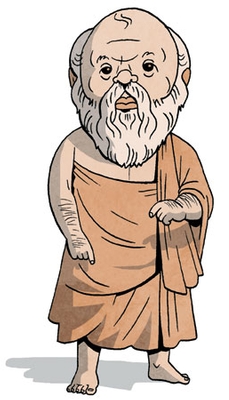
Socrates

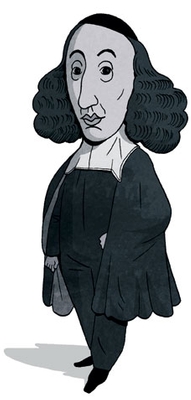
Baruch Spinoza

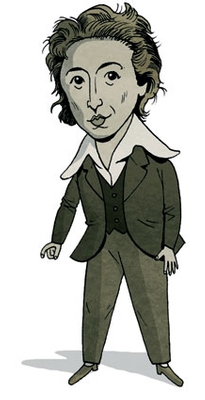
Percy Bysshe Shelley

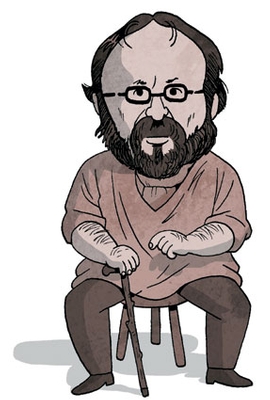
Pierre-Joseph Proudhon

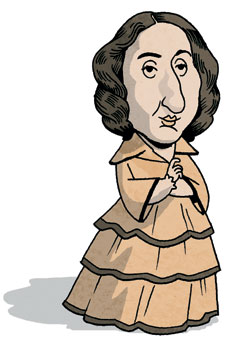
George Eliot

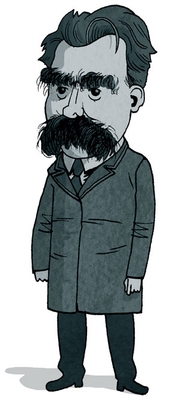
Friedrich Nietzsche

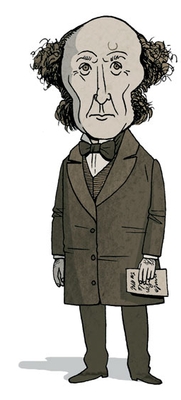
John Stuart Mill

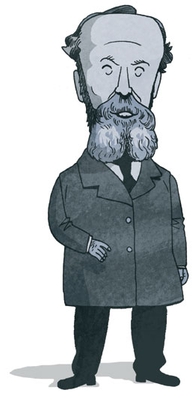
William James

— newhumanist.org.uk,

Scott Garrett