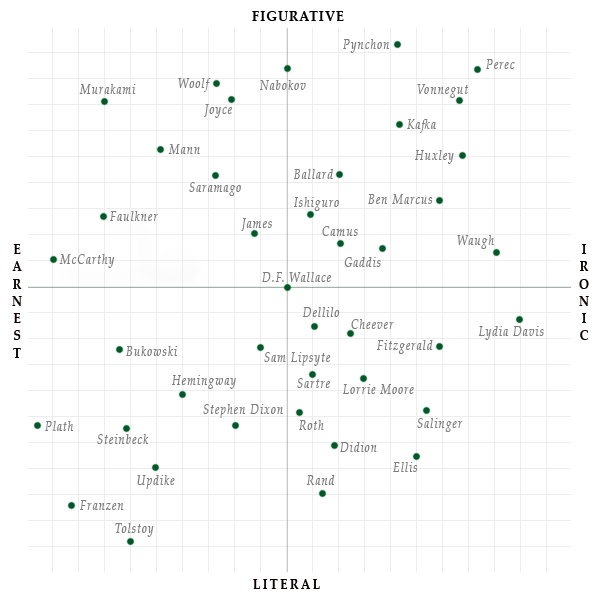
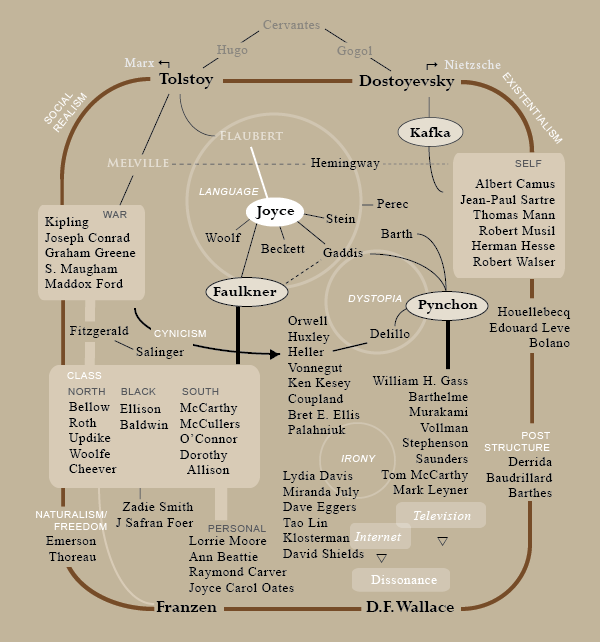
— via laphamsquarterly

— via laphamsquarterly
Let yourself be silently drawn
By the strange pull of what you really love.
It will not lead you astray.
— Rumi
And perhaps the sexes are more related than we think, and the great renewal of the world will perhaps consist in this, that man and maid, freed of all false feeling and aversion, will seek each other not as opposites, but as brother and sister, as neighbors, and will come together as human beings, in order simply, seriously and patiently to bear in common the difficult generation that is their burden.
— Rainer Maria Rilke, Letters to a Young Poet
(via toadustyshelfweaspire)
Faith is always coveted most and needed most urgently where will is lacking; for will, as the affect of command, is the decisive sign of sovereignty and strength. In other words, the less one knows how to command, the more urgently one covets someone who commands, who commands severely — a god, prince, class, physician, father confessor, dogma, or party conscience. From this one might perhaps gather that the two world religions, Buddhism and Christianity, may have owed their origin and above all their sudden spread to a tremendous collapse and disease of the will. And that is what actually happened: both religions encountered a situation in which the will had become diseased, giving rise to a demand that had become utterly desperate for some “thou shalt.” Both religions taught fanaticism in ages in which the will had become exhausted, and thus they offered innumerable people some support, a new possibility of willing, some delight in willing. For fanaticism is the only “strength of the will” that even the weak and insecure can be brought to attain, being a sort of hypnotism of the whole system of the senses and the intellect for the benefit of an excessive nourishment (hypertrophy) of a single point of view and feeling that henceforth becomes dominant — which the Christian calls his faith. Once a human being reaches the fundamental conviction that he must be commanded, he becomes “a believer.” Conversely, one could conceive of such a pleasure and power of self-determination, such a freedom of the will that the spirit would take leave of all faith and every wish for certainty, being practiced in maintaining himself on insubstantial ropes and possibilities and dancing even near abysses. Such a spirit would be the free spirit par excellence.
These are my words. Press them against your gums.
In the beginning God Sr. made God Jr.
because everyone needs to come
from somewhere.
That means God Sr. just appeared
& that wouldn’t make any sense.
Know this book doesn’t make any sense,
but neither did the first one.
Still, follow me.
Tucking God Jr. into bed, God Sr. tells him
I hope you dream about stupid zombies
instead of martyrs being eaten by lions.
God Jr. is scared of lions because thoughts
of the future are worse than thoughts of the past
when the past is just beginning, like fourteen
lines ago beginning.
You’ll never really love them that much anyway
God Sr. tells Him, words about the martyrs,
not the lions. They pretty much deserve that shit.
The sky is always bloated, constantly held up by strings.
That’s got to be uncomfortable.
God Jr., holding a ball of clay the size
of a lampshade, wishes for two brothers,
pieces of Himself that would be next to Him,
inside pieces of those who formed worse
versions of Him.
Figure that shit out.
The Holy Ghost feels so cramped trying to build
a house from something no bigger than a fist.
To Him, nothing will ever be bloated enough.
Does God Jr. feel the nails through His wrists
while the second part of Him feels it, too?
Does He wish for more pills
while I wish no more pills, please?
I am quitting every drug that doesn’t get wet
when turned on.
There is nothing natural about a disaster.
Elephants, I am sorry you only have a little while left.
Eventually Kentucky will be beachfront property.
The biggest thing I am wondering is, how did space
gas get so goddamn beautiful?
— Gregory Sherl
Life will break you. Nobody can protect you from that, and living alone won’t either, for solitude will also break you with its yearning. You have to love. You have to feel. It is the reason you are here on earth. You are here to risk your heart. You are here to be swallowed up. And when it happens that you are broken, or betrayed, or left, or hurt, or death brushes near, let yourself sit by an apple tree and listen to the apples falling all around you in heaps, wasting their sweetness. Tell yourself you tasted as many as you could.
— Louise Erdrich, The Painted Drum

Stuck on the pane two flies buzzed, stuck.
Glowing wine on his palate lingered swallowed. Crushing in the winepress grapes of Burgundy. Sun’s heat it is. Seems to a secret touch telling me memory. Touched his sense moistened remembered. Hidden under wild ferns on Howth below us bay sleeping: sky. No sound. The sky. The bay purple by the Lion’s head. Green by Drumleck. Yellowgreen towards Sutton. Fields of undersea, the lines faint brown in grass, buried cities. Pillowed on my coat she had her hair, earwigs in the heather scrub my hand under her nape, you’ll toss me all. O wonder! Coolsoft with ointments her hand touched me, caressed: her eyes upon me did not turn away. Ravished over her I lay, full lips full open, kissed her mouth. Yum. Softly she gave me in my mouth the seedcake warm and chewed. Mawkish pulp her mouth had mumbled sweetsour of her spittle. Joy: I ate it: joy. Young life, her lips that gave me pouting. Soft warm sticky gumjelly lips. Flowers her eyes were, take me, willing eyes. Pebbles fell. She lay still. A goat. No-one. High on Ben Howth rhododendrons a nannygoat walking surefooted, dropping currants. Screened under ferns she laughed warmfolded. Wildly I lay on her, kissed her: eyes, her lips, her stretched neck beating, woman’s breasts full in her blouse of nun’s veiling, fat nipples upright. Hot I tongued her. She kissed me. I was kissed. All yielding she tossed my hair. Kissed, she kissed me.
Me. And me now.
Stuck, the flies buzzed.
— James Joyce, Ulysses

There are people who say, ‘If music’s that easy to write, I could do it.’ Of course they could, but they don’t. I find [Morton] Feldman’s own statement more affirmative. We were driving back from some place in New England where a concert had been given. He is a large man and falls asleep easily. Out of a sound sleep, he awoke to say, ‘Now that things are so simple, there’s so much to do.’
— John Cage, Indeterminacy
via

Raquel Welch: [. . .] I remember Jimmy Coburn once said to me, “You know what’s the sexiest thing of all? A little mystery.” And he was so right about that. When you put it all out there, there’s nothing left to the imagination. So where am I going to participate? I’ve said this before and I still agree with it, the most erogenous zone is the brain. It’s all happening there. Otherwise, it’s just body parts.
MH: You once said that you think sex is overrated. Could you elaborate?
Raquel Welch: I mean just the sex act itself.
MH: Really? Are you sure you’ve been doing it right?
Raquel Welch: I think we’ve gotten to the point in our culture where we’re all sex addicts, literally. We have equated happiness in life with as many orgasms as you can possibly pack in, regardless of where it is that you deposit your love interest.
MH: Okay, admittedly that doesn’t make sex sound very appealing at all.
Raquel Welch: It’s just dehumanizing. And I have to honestly say, I think this era of porn is at least partially responsible for it. Where is the anticipation and the personalization? It’s all pre-fab now. You have these images coming at you unannounced and unsolicited. It just gets to be so plastic and phony to me. Maybe men respond to that. But is it really better than an experience with a real life girl that he cares about? It’s an exploitation of the poor male’s libidos. Poor babies, they can’t control themselves.
MH: I cannot dispute any of what you’re saying.
Raquel Welch: I just imagine them sitting in front of their computers, completely annihilated. They haven’t done anything, they don’t have a job, they barely have ambition anymore. And it makes for laziness and a not very good sex partner. Do they know how to negotiate something that isn’t pre-fab and injected directly into their brain?
MH: You make some good points, but it could also be argued that railing against kids today and their sexual obsessiveness could come across as a little over-the-hill cranky and prudish.
Raquel Welch: I know it does, and I’m fine with that. I don’t care if I’m becoming one of those old fogies who says, “Back in my day we didn’t have to hear about sex all the time.” Can you imagine? My fantasies were all made up on my own. They’re ruining us with all the explanations and the graphicness. Nobody remembers what it’s like to be left to form your own ideas about what’s erotic and sexual. We’re not allowed any individuality. I thought that was the fun of the whole thing. It’s my fantasy. I didn’t pick it off the Internet somewhere. It’s my fantasy.
— Men’s Health interview with Raquel Welch


*
The book of love is long and boring
No one can lift the damn thing
It’s full of charts and facts and figures
And instructions for dancing
But I, I love it when you read to me
And you, you can read me anything
The book of love has music in it
In fact that’s where music comes from
Some of it is just transcendental
Some of it is just really dumb
But I, I love it when you sing to me
And you, you can sing me anything
The book of love is long and boring
And written very long ago
It’s full of flowers and heart-shaped boxes
And things we’re all too young to know
But I, I love it when you give me things
And you, you ought to give me wedding rings
I, I love it when you give me things
And you, you ought to give me wedding rings
— The Magnetic Fields, “The Book of Love”
With the addition of milk or buttermilk potatoes form a scientifically satisfactory diet, as the physique of the pre-famine Irish proved. Arthur Young contrasted the Irishman’s potato diet favorably with the contemporary English labourer’s bread and cheese. The Irish, he wrote, “have a bellyful . . . I will not assert that potatoes are a better food than bread and cheese but I have no doubt of a bellyful of the one being much better than half a bellyful of the other.”
— Cecil Woodham-Smith, The Great Hunger: Ireland 1845-1849

Let’s tackle one of the literary set’s favorite orthodoxies head on: that the world “needs stories.” There is an enormous need,” Jonathan Franzen declares in an interview with Corriere della Sera (there’s no escape these days), “for long, elaborate, complex stories, such as can only be written by an author concentrating alone, free from the deafening chatter of Twitter.”
Of course as a novelist it is convenient to think that by the nature of the job one is on the side of the good, supplying an urgent and general need. I can also imagine readers drawing comfort from the idea that their fiction habit is essential sustenance and not a luxury. But what is the nature of this need? What would happen if it wasn’t met? We might also ask: why does Franzen refer to complexstories? And why is it important not to be interrupted by Twitter and Facebook? Are such interruptions any worse than an old land line phone call, or simply friends and family buzzing around your writing table? Jane Austen, we recall, loved to write in domestic spaces where she was open to constant interruption.
Proponents of “the world needs stories” thesis are legion, but one of the more elaborate statements comes in Salman Rushdie’s novel Haroun and the Sea of Stories (1990). Here, in a text that falls between fable and magical realism, the telling of many stories is aligned with the idea of a natural ecology; in the normal and healthy way of things, we’re told, all the different stories of the world flow together in a great ocean of narrative. But now this harmony is threatened by an evil “cultmaster” who seeks to poison and eventually shut off the flow of stories, imposing universal silence and sterility as part of a bid for omnipotence.
Given Rushdie’s personal plight at the time of writing, it’s hard not to think of the “cultmaster” as a metamorphosis of the Ayatollah Khomeini. Stories are presented as a manifestation of the natural pluralism of the imagination, engaged in a mortal battle against any fundamentalism that would impose its own, univocal version: fiction is on the side of freedom. Of course.
Rushdie’s narrative is charming, but his ocean of stories argument never, to risk a pun, holds water. Far from flowing together in a harmonious ecology, stories tend to be in constant competition with each other. Far from imposing silence, cults, religions, and ideologies of all kinds have their own noisy stories to tell. Christian fundamentalism with its virgin birth, miracles, exorcisms, and angels boasts a rich narrative flora; if we toss into the mix the Catholic saints and their colorful martyrdoms we can hardly complain that the censorship and repression of the Inquisition resulted in story-less silence.
Rather the problem is that preacher and polemicist want us to accept just one, mutually exclusive set of stories, one vision, which we must believe is true. And many people are happy to do this. Once they’ve signed up to a Christian, Muslim, Buddhist, or even liberal pluralist narrative it’s unlikely they’ll go out of their way to research competing accounts of the world. People tend to use stories of whatever kind to bolster their beliefs, not to question them.
But I doubt if this politicized version of the we-need-stories thesis was what a writer like Franzen was thinking of. “This is an excellent novel,” I remember a fellow judge for a literary prize repeatedly telling the rest of the jury every time he encouraged us to vote for a book, “because it offers complex moral situations that help us get a sense of how to live and behave.” The argument here is that the world has become immensely complicated and the complex stories of our novels help us to see our way through it, to shape a trajectory for ourselves in the increasingly fragmented and ill-defined social world we move in.
There’s something to be said for this idea, though of course stories are by no means the exclusive territory of novels; the political, sports, and crime pages of the newspapers are full of fascinating stories, many of them extremely challenging and complex. What the novel offers, however, is a tale mediated by the individual writer who (alone, away from Facebook and Twitter) works hard to shape it and deliver it in a way that he or she feels is especially attractive, compelling, and right.
Here again, though, even if we are not immediately aware of it, and even when the author is celebrated for his or her elusive ambiguity (another lit-crit commonplace), such stories compete for our assent and seek to seduce us toward the author’s point of view. D.H. Lawrence attacked Tolstoy’s novels as evil, immoral, and deeply corrupting. Writing about Thomas Hardy he rather brilliantly questions the motives behind Hardy’s habit of having his more talented and spiritually adventurous characters destroyed by society; Hardy goes “against himself” Lawrence tells us (meaning, against his own specially gifted nature), to “stand with the average against the exception,” and all this “in order to explain his own sense of failure.” To Lawrence’s mind, a tremendously complex story like Jude the Obscure becomes an invitation not to try to realize your full potential but to settle instead for self-preservation. Hardy reinforces the mental habits of the frightened reader. It is pernicious. In this view of things, rather than needing stories we need to learn how to smell out their drift and resist them.
But there’s something deeper going on. Even before we actually tell any stories, the language we use teems with them in embryo form. There are words that simply denote things in nature: a pebble, a tree. There are words that describe objects we make: to know the word “chair” is to understand about moving from standing to sitting and appreciate the match of the human body with certain shapes and materials. But there are also words that come complete with entire narratives, or rather that can’t come without them. The only way we can understand words like God, angel, devil, ghost, is through stories, since these entities do not allow themselves to be known in other ways, or not to the likes of me. Here not only is the word invented—all words are—but the referent is invented too, and a story to suit. God is a one-word creation story.
Arguably the most important word in the invented-referents category is “self.” We would like the self to exist perhaps, but does it really? What is it? The need to surround it with a lexical cluster of reinforcing terms—identity, character, personality, soul—all with equally dubious referents suggests our anxiety. The more words we invent, the more we feel reassured that there really is something there to refer to.
Like God, the self requires a story; it is the account of how each of us accrues and sheds attributes over seventy or eighty years—youth, vigor, job, spouse, success, failure—while remaining, at some deep level, myself, my soul. One of the accomplishments of the novel, which as we know blossomed with the consolidation of Western individualism, has been to reinforce this ingenious invention, to have us believe more and more strongly in this sovereign self whose essential identity remains unchanged by all vicissitudes. Telling the stories of various characters in relation to each other, how something started, how it developed, how it ended, novels are intimately involved with the way we make up ourselves. They reinforce a process we are engaged in every moment of the day, self creation. They sustain the idea of a self projected through time, a self eager to be a real something (even at the cost of great suffering) and not an illusion.
The more complex and historically dense the stories are, the stronger the impression they give of unique and protracted individual identity beneath surface transformations, conversions, dilemmas, aberrations. In this sense, even pessimistic novels—say, J.M. Coetzee’s Disgrace—can be encouraging: however hard circumstances may be, you do have a self, a personal story to shape and live. You are a unique something that can fight back against all the confusion around. You have pathos.
This is all perfectly respectable. But do we actually need this intensification of self that novels provide? Do we need it more than ever before?
I suspect not. If we asked the question of, for example, a Buddhist priest, he or she would probably tell us that it is precisely this illusion of selfhood that makes so many in the West unhappy. We are in thrall to the narrative of selves that do not really exist in the way we imagine, a fabrication in which most novel-writing connives. Schopenhauer would have agreed. He spoke of people “deluded into an absolutely false view of life by reading novels,” something that “generally has the most harmful effect on their whole lives.” Like the Buddhist priest, he would have preferred silence or the school of experience, or the kind of myth or fable that did not invite excited identification with an author alter ego.
Personally, I fear I’m too enmired in narrative and self narrative to bail out now. I love an engaging novel, I love a complex novel; but I am quite sure I don’t need it. And my recently discovered ability, as discussed in this space a couple of weeks ago, to set down even some fine novels before reaching the end does give me a glimmer of hope that I may yet make a bid for freedom from the fiction that wonderfully enslaves us.
— Tim Parks
nybooks