[It is possible to] become assimilated to the literal contents of the art we contemplate [so] that our contemplation of cruelty will not make us humane but cruel; that the reiteration of the badness of our spiritual condition will make us consent to it.
Quotes
Ha!
It doesn’t have ANY effect on your life. What do you care?! People try to talk about it like it’s a social issue. Like when you see someone stand up on a talk show and say “How am I supposed to explain to my child that two men are getting married?” ….. I dunno, it’s your shitty kid, you fuckin’ tell ’em. Why is that anyone else’s problem? Two guys are in LOVE but they can’t get married because YOU don’t want to talk to your ugly child for fuckin’ five minutes?
— Louis C. K.
The dangers of fast thinking
CONSIDER THIS: A study of the incidence of kidney cancer in the 3,141 counties of the United States reveals a remarkable pattern. The counties in which the incidence of kidney cancer is lowest are mostly rural, sparsely populated, and located in traditionally Republican states in the Midwest, the South, and the West. Now, what do you make of this information?
Your mind has been very active in the last few seconds, and it was mainly operating in what I call System 2 — the “slow” mode of thinking involved in effortful activities such as doing taxes, comparing two washing machines for best value, or driving in traffic. You deliberately searched memory and formulated hypotheses. Some effort was involved; your pupils dilated, and your heart rate increased measurably. But System 1 — the “fast” mode, which includes reacting to loud sounds, understanding simple sentences, and driving on empty roads — was not idle: You probably rejected the idea that Republican politics provide protection against kidney cancer. Very likely, you ended up focusing on the fact that the counties with low incidence of cancer are mostly rural. The statisticians Howard Wainer and Harris Zwerling, from whom I learned this example, commented, “It is both easy and tempting to infer that their low cancer rates are directly due to the clean living of the rural lifestyle — no air pollution, no water pollution, access to fresh food without additives.” This makes perfect sense.
Now consider the counties in which the incidence of kidney cancer is highest. These ailing counties tend to be mostly rural, sparsely populated, and located in traditionally Republican states in the Midwest, the South, and the West. Wainer and Zwerling comment, “It is easy to infer that their high cancer rates might be directly due to the poverty of the rural lifestyle — no access to good medical care, a high-fat diet, and too much alcohol, too much tobacco.” Something is wrong, of course. The rural lifestyle cannot explain both a very high and a very low incidence of kidney cancer.
The key factor is not that the counties were rural or predominantly Republican. It is that rural counties have small populations. And the main lesson to be learned is not about epidemiology, it is about the difficult relationship between our mind and statistics. System 1 is highly adept in one form of thinking — it automatically and effortlessly identifies causal connections between events, sometimes even when the connection is spurious. When told about the high-incidence counties, you immediately assumed that these counties are different from other counties for a reason, that there must be a cause that explains this difference. As we shall see, however, System 1 is inept when faced with “merely statistical” facts, which change the probability of outcomes but do not cause them to happen.
The predictability of randomness
A RANDOM EVENT, by definition, does not lend itself to explanation, but collections of random events do behave in a highly regular fashion. Imagine a large urn filled with marbles. Half the marbles are red, half are white. Next, imagine a very patient person (or a robot) who blindly draws four marbles from the urn, records the number of red balls in the sample, throws the balls back into the urn, and then does it all again, many times. If you summarize the results, you will find that the outcome “two red, two white” occurs (almost exactly) six times as often as the outcome “four red” or “four white.” This relationship is a mathematical fact.
A related statistical fact is relevant to the cancer example. From the same urn, two very patient marble counters take turns. Jack draws four marbles on each trial, Jill draws seven. They both record each time they observe a homogeneous sample — all white or all red. If they go on long enough, Jack will observe such extreme outcomes more often than Jill — by a factor of eight (the expected percentages are 12.5 percent and 1.56 percent). No causation, but a mathematical fact: Samples of four marbles yield extreme results more often than samples of seven marbles do.
Now imagine the population of the United States as marbles in a giant urn. Some marbles are marked KC, for kidney cancer. You draw samples of marbles and populate each county in turn. Rural samples are smaller than other samples. Just as in the game of Jack and Jill, extreme outcomes (very high and/or very low cancer rates) are most likely to be found in sparsely populated counties. This is all there is to the story.
Our predilection for causal thinking exposes us to serious mistakes in evaluating the randomness of truly random events. For an example, take the sex of six babies born in sequence at a hospital. The sequence of boys and girls is obviously random; the events are independent of each other, and the number of boys and girls who were born in the hospital in the last few hours has no effect whatsoever on the sex of the next baby. Now consider three possible sequences:
BBBGGG
GGGGGG
BGBBGB
Are the sequences equally likely? The intuitive answer — “of course not!” — is false. Because the events are independent and because the outcomes B and G are (approximately) equally likely, then any possible sequence of six births is as likely as any other. Even now that you know this conclusion is true, it remains counterintuitive, because only the third sequence appears random. As expected, BGBBGB is judged much more likely than the other two sequences. We are pattern seekers, believers in a coherent world, in which regularities (such as a sequence of six girls) appear not by accident but as a result of mechanical causality or of someone’s intention. We do not expect to see regularity produced by a random process, and when we detect what appears to be a rule, we quickly reject the idea that the process is truly random. Random processes produce many sequences that convince people that the process is not random after all. You can see why assuming causality could have had evolutionary advantages. It is part of the general vigilance that we have inherited from ancestors. We are automatically on the lookout for the possibility that the environment has changed. Lions may appear on the plain at random times, but it would be safer to notice and respond to an apparent increase in the rate of appearance of prides of lions, even if it is actually due to the fluctuations of a random process.
The myth of the hot hand
AMOS TVERSKY AND his students Tom Gilovich and Robert Vallone once caused a stir with their study of misperceptions of randomness in basketball. The “fact” that players occasionally acquire a hot hand is generally accepted by players, coaches, and fans. The inference is irresistible: A player sinks three or four baskets in a row and you cannot help forming the causal judgment that this player is now hot, with a temporarily increased propensity to score. Players on both teams adapt to this judgment — teammates are more likely to pass to the hot scorer and the defense is more likely to double-team. Analysis of thousands of sequences of shots led to a disappointing conclusion: There is no such thing as a hot hand in professional basketball, either in shooting from the field or scoring from the foul line. Of course, some players are more accurate than others, but the sequence of successes and missed shots satisfies all tests of randomness. The hot hand is entirely in the eye of the beholders, who are consistently too quick to perceive order and causality in randomness. The hot hand is a massive and widespread cognitive illusion.
The public reaction to this research is part of the story. The finding was picked up by the press because of its surprising conclusion, and the general response was disbelief. When the celebrated coach of the Boston Celtics, Red Auerbach, heard of Gilovich and his study, he responded, “Who is this guy? So he makes a study. I couldn’t care less.” The tendency to see patterns in randomness is overwhelming — certainly more impressive than a guy making a study.
The secret of successful schools
I BEGAN WITH the example of cancer incidence across the United States. The example appears in a book intended for statistics teachers, but I learned about it from an amusing article by the two statisticians I quoted earlier, Wainer and Zwerling. Their essay focused on a large investment, some $1.7 billion, which the Gates Foundation made to follow up intriguing findings on the characteristics of the most successful schools. Many researchers have sought the secret of successful education by identifying the most successful schools in the hope of discovering what distinguishes them from others. One of the conclusions of this research is that the most successful schools, on average, are small. In a survey of 1,662 schools in Pennsylvania, for instance, six of the top 50 were small, which is an overrepresentation by a factor of four. These data encouraged the Gates Foundation to make its investment in the creation of small schools, sometimes by splitting large schools into smaller units.
This probably makes intuitive sense to you. It is easy to construct a causal story that explains how small schools are able to provide superior education and thus produce high-achieving scholars by giving them more personal attention and encouragement than they could get in larger schools.
Unfortunately, the causal analysis is pointless because the facts are wrong. If the statisticians who reported to the Gates Foundation had asked about the characteristics of the worst schools, they would have found that bad schools also tend to be smaller than average. The truth is that small schools are not better on average; they are simply more variable. If anything, say Wainer and Zwerling, large schools tend to produce better results, especially in higher grades, where a variety of curricular options is valuable.
The law of small numbers is part of a larger story about the workings of the mind: Statistics produce many observations that appear to beg for causal explanations but do not lend themselves to such explanations. Many facts of the world are due to chance, including accidents of sampling. And causal explanations of chance events are inevitably wrong.
©2011 by Daniel Kahneman. Reprinted by permission of Farrar, Straus & Giroux. All rights reserved. Excerpted from Thinking, Fast and Slow.
What makes you feel masculine?
What makes you feel masculine? That’s the question photographer Chad States asked the subjects of his recent series of portraits.
I am masculine because I abandon women after taking their love. Because when you study Freud you don’t let him study you. Because I study philosophy not literature.
—Luke
Fascism today
Fascism in America won’t come with jackboots, book burnings, mass rallies, and fevered harangues, nor will it come with black helicopters or tanks on the street. It won’t come like a storm, but as a break in the weather, that sudden change of season you might feel when the wind shifts on an October evening: Everything is the same, but everything has changed. Something has gone, departed from the world, and a new reality will have taken its place. All the old forms will still be there: legislatures, elections, campaigns, plenty of bread and circuses. But ‘consent of the governed’ will no longer apply; actual control of the state will have passed to a small and privileged group who rule for the benefit of their wealthy peers and corporate patrons.
To be sure, there will be factional conflicts among the elite, and a degree of debate will be permitted; but no one outside the privileged circle will be allowed to influence state policy. Dissidents will be marginalized, usually by ‘the people’ themselves. Deprived of historical knowledge by a thoroughly impoverished educational system designed to produce complacent consumers, left ignorant of current events by a corporate media devoted solely to profit, many will internalize the force-fed values of the ruling elite, and act accordingly. There will be little need for overt methods of control.
The rulers will act in secret, for reasons of ‘national security’ and the people will not be permitted to know what goes on in their name. Actions once unthinkable will be accepted as routine: government by executive fiat, state murder of ‘enemies’ selected by the leader, undeclared wars, torture, mass detentions without charge, the looting of the national treasury, the creation of huge new ‘security structures’ targeted at the populace. In time, this will be seen as ‘normal’, as the chill of autumn feels normal when summer is gone. It will all seem normal.
— Chris Floyd, November 10, 2001, Moscow Times
Been out ice fishin: too much repetition
Fifteen under zero when the day became a threat
My clothes were wet and I was drenched to the bone
Been out ice fishin, mmmm too much repetition
Make a man wanna leave the only home he’s known
— The Band, “Acadian Driftwood”
Psilocybin for depression
“Magic” mushrooms could have the capacity not only to blow users’ minds but also to heal them. British neuroscientists injected volunteers with the chemical psilocybin, the psychedelic ingredient in hallucinogenic mushrooms, while scanning their brains. Since psilocybin mushrooms “are thought of as ‘mind-expanding’ drugs,” the scientists expected to see marked increases in brain activity, Imperial College London professor David Nutt tells Nature News. But to their surprise, activity decreased — especially in the parts of the brain that ground us in reality and govern our sense of self. Those regions — the medial prefrontal cortex and the posterior cingulate cortex — tend to be hyperactive in people with depression. The finding suggests that psilocybin’s ability to give recreational users dream-like, out-of-body experiences could also help depressed patients break free of the “particularly restrictive state of mind” that forces them into loops of negative thinking, says study co-author Robin Carhart-Harris. The effects could also be long-lasting; previous research has shown that a single high dose of psilocybin can improve the mood of recipients for more than a year.
— The Week, February 10, 2012
Contempt
Evaluation of the field post letters up until now has shown without doubt that not only German Army commanders had given up the orders, the commissar order to murder, but that the simple soldiers were willing to execute these orders because of their ingrained hatred. The image of the Jewish Bolshevist foe was widespread.
The question that is bound to occur is: What was the average German of that time capable of? What were Germans willing to do?
One must distinguish precisely between anti-Semitism and genocide of the Jews and ask: How did anti-Semitism develop into genocide? That was the barrier, so to speak, that had to be overcome.
They didn’t march in [to Lemberg] with genocide of the Jews in mind. It would be all wrong to claim that. It would be unfair to these soldiers. They didn’t know what was in store for them, what was planned. Some of the orders were unknown to them. They were only told during the attack. But this racism that suddenly foments murder happened there.
… the ideological conviction that “these are subhumans and we have to murder them. As superhumans we have the right to do so.”
This contempt strengthened the anti-Semitism. Contempt is an incredibly negative emotion. Hate is something else. The Soviets and the Bolsheviks were hated. They were the enemy, but when you feel contempt for someone, they are unworthy of living. Moreover, they are unworthy of existing on this earth. . . . Contempt is not synonymous with willingness to kill, but for a start, harassing. Cutting off beards. . . . Beards are cut off to humiliate. . . . Inhibitions about violence had vanished. . . . And if a pogrom begins, if Jews are suddenly persecuted, they are the ones held in contempt.
— Various German historians interviewed in the documentary The Unknown Soldier
The tribal psychology of political sacredness
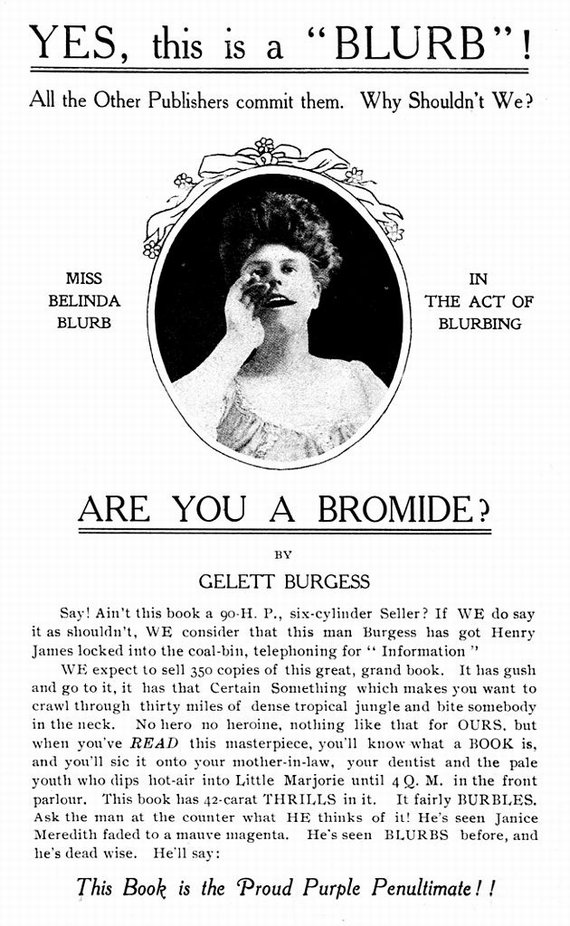
The (f)art of the blurb
Librarian Porn
By Avi Steinberg
theparisreview
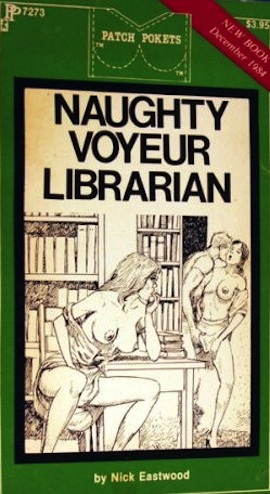
Porn books and librarians have always had a passionate, mutually defining relationship—it was, in fact, a prudish French librarian in the early nineteenth century who coined the word pornography. So it comes as no surprise that the sexy librarian, a fixture of the pornographic imagination, is most at home in books. Each year, new titles are added to the librarian-porn bookshelf. This past season’s crop included additions like Hot for Librarian by Anastasia Carrera; Lucy the Librarian—Dewey and His Decimal by John and Shauna Michaels; The Nympho Librarian and Other Stories by Chrissie Bentley and Jenny Swallows; A Librarian’s Desire by Ava Delaney, author of the Kinky Club series; and soft-core selections like Sweet Magick by Penny Watson. The conventions of the form—the dimly lit stacks, the librarian’s mask of thick glasses and hair tied into a bun, et cetera—are, of course, well known. Unlike video porn, where these conventions are typically used as a wholesale substitute for narrative, porn books still feel the compulsion to tell a story, to make the glasses and bun mean something. I was curious just what story these new books were telling. What does our most current version of the librarian fantasy say about us? To answer this question, I visited the library.
Almost immediately, I hit a snag. It is close to impossible to browse a serious library’s collection of porn and porn criticism without getting sucked into big, sexy historical theories. Within an hour of my visit to Harvard’s Widener Library, I was beginning to suspect that smut had been behind the rise of … everything. I discovered that pornos caused the French Revolution, and that the Renaissance really got going when images of hard-core, swan-on-guy action began to circulate among the people. Every pornographer of note, it seemed, was a pop philosopher; every philosopher, a closet pornographer. As for the rise of the novel, of literary realism, this, I learned, was linked to a certain eighteenth-century depiction of a ponytailed dude taking it from behind from another ponytailed dude while the first dude gets sucked off by a chick, who is also taking it from behind from yet a third ponytailed dude, all while another chick—who happens to be wearing a lovely Dormeuse-style cap—rides piggyback on the first dude, which positions her perfectly to flog the third dude, while being orally pleasured from behind by the second dude. The caption to this illustration reads, “A Typical Scene.” According to the pile of books I’d stacked onto my library desk, our story is nothing but the evolutionary history of the Porno sapiens.
Just as I was letting this thought settle in, I began to hear moaning sounds. At first, I dismissed these as some kind of auditory hallucination, an occupational hazard of reading too much porn. But then I looked around and determined that this particular moaning belonged to a real woman standing a few rows away. To be precise, she was in the process of being properly pinned to the bookshelf by a male companion. After a hasty glance, I retreated to my carrel but can report that the proceedings were, if not quite spirited, certainly forceful—a book fell from the shelf—and that they terminated in muffled resound and a swift escape.
I was alone again in the silence of the stacks. Never before had the questions of the library sex fantasy been so close at hand yet so elusive. What was the relationship between these library fuckers and what I had been reading? And what was the relationship between the library fuckers and what they had been reading? Wasn’t library sex all about harmonizing books with experience, about connecting our unruly and our rule-abiding selves? And, if so, why did I find that the stories told in last year’s library-porn books consistently painted a grim picture of twenty-first-century library sex? Why did many of the best sex scenes in today’s librarian porn take place outside of a library?
It wasn’t always this way. Library sex began with high hopes. Long before the era of the public library, stories of sex among books were set in private collections, in secluded humanist studies. The protagonist of Antonio Vignali’s 1526 La Cazzaria (The Book of the Prick) examines a collection of raunchy books and manuscripts in a private study as he awaits the arrival of a lover. The presence of smutty works in progress is telling: there is an elegant cross-pollination here. Books inspire sex, sex creates books—and all within the four walls of the library.
A Chinese Tale, a filthy poem published anonymously in 1740 and available on the streets of London for a shilling, introduces Cham-yam, a young lady blessed with “a most inviting Tit, and dainty, / As ere seen ’twixt twelve and twenty.” She is sitting in her study. After detailing a long, breathless bibliography of erotic books, the poet concludes, “What more can heighten mortal Sense / Than all this soft Magnificence?” Cham-yam, curious to understand the rise and fall of civilizations—how, in other words, the male passion for sex leads to great wars and upheavals—lifts her naked leg onto a table and gazes into a carefully placed looking glass. There, between her legs, she beholds the secret to understanding the tides of history, “the World’s great Primum Mobile, / That Master-piece! That Source of Passion! / that Thing! that’s never out of Fashion.” The library sex that follows is understood as an advanced study of history that unifies all bodies of knowledge in the bodies of the people who pursue knowledge.
It took more than two hundred years, the creation of the public library, the rise of women in the profession of librarianship and second-wave feminism for library sex to get serious again, in the 1970s. Although there is no authoritative list of titles from this late-twentieth-century renaissance, serious readers and writers of contemporary library porn consistently cite Bang the Librarian Hard, Hot Pants Librarian, The Librarian Gets Hot, The Librarian Got Hot, The Librarian Loves to Lick, and scores of other titles from those years.
Bang the Librarian Hard is a case in point of this earnest libertine revival. After a dirty interlude with the school’s coach on her office floor, librarian Samantha turns to the man and says, “Hasn’t your attitude toward libraries and librarians changed in this past hour?” Samantha is a proud activist, a progressive. Her passionate approach to library science also makes a strong impression on the conservative head librarian, an older woman who hasn’t benefited from women’s lib. There is a poignant cultural moment when Ms. Gustafson turns to Samantha during a threesome and says, “I’m so grateful to you, my dear.” After a great deal more shagging, on a pile of noncirculating books and on a marvelous secret bed that flips out of the stacks, Samantha rises to the post of head librarian—Ms. Gustafson retires and founds an NGO dedicated to “sex counseling for undersexed older women.” After a celebratory roll in the hay, Samantha muses on her triumphs and on history.
Head librarian, she thought. She was so fucking proud of that … She was going to be known as the best fucking librarian in Madison High School history.
This was also the era of the road-tripping sexy librarian, the picaresque heroine. Remember Lynn, in Waldo Beck’s 1974 The Lusty Librarian? After fornicating with a prudish American college town she responded to her critics by traveling to Spain and fornicating with a hotel mariachi band. With Lynn, and her cohort, there was a confident sense that the library had set them free. Even on the road, they were sexy librarians.
Today’s library porn lit is a totally different story. An inferiority complex has crept into the books’ marketing divisions, as evidenced by the anxiety-laden description of 2008’s The Librarian’s Naughty Habit:
Though not quite a classic on a par with The Librarian Loves to Lick and lacking the studied innocence of Horny Peeping Librarian, The Librarian’s Naughty Habit is easily the finest account of sex and the circulation desk that we at the Olympia Press can legally do.
Gone are the boasts of being the law-bending revolutionary, “the best fucking librarian”: the best that can be said of contemporary library porn is that it’s legal. Another recent title, Lucy the Librarian, is a good example of this year’s gloomy mood. In Lucy, we read of a “pleasantly plump” public librarian and her tryst with a mysterious reader. The book dishes up American-size portions of the genre’s conventions: the outsize appetites of repressed book lovers, the S and M underpinnings of the Dewey Decimal System, the librarian’s uniform, and, of course, transgressive screwing in a semipublic corner of the shelves.
But a closer look at Lucy reveals a zeitgeist of anxiety. In a lot of recent library-porn lit, sex is set against an anguished backstory. Lucy, we learn, is a woman of her desperate times. She hasn’t had sex in two years, ever since her boyfriend left her for a woman who works in … the video industry. When Lucy tells another librarian of her plan to linger after-hours to do “online research”—an excuse for a rendezvous in the stacks—her library colleague tartly replies, “You know the porn’s blocked, right?” The joke is supposed to be on the coworker and, by extension, on our culture of video porn. Lucy’s very real encounter in the stacks is the modern library’s attempted rejoinder to the loneliness of life online. The physicality of the library space is presented here as a concrete alternative to the interminable virtualness of contemporary erotic imagination. It’s the last argument for the library’s continued relevance as a space and of the subversive potential of books—both of which are, ironically, called into question by the very existence of Lucy. This book, like all recent library-porn books, cannot not be found on any actual shelf in the real world. It lives exclusively in virtual space.
Existential anxiety has become the central theme of these books. In a 2010 book, Ava Delaney’sThe Librarian’s Love—not to be confused with its precursor, Delaney’s 2011 A Librarian’s Desire—Erica, a weary librarian, suddenly encounters an old boyfriend in her section of the stacks. In graphic detail we learn just how “a nearly extinct flame is rekindled in the Paleontology section.” The threat of extinction has become a mainstay of recent library porn: again and again, the neglected love life of the librarian is a stand-in for the doomed state of the library generally.
According to our porn books, the library, once a hothouse of eros and a laboratory of realism, has become a burial site. But somewhere on those shelves there’s still a memory of when books were really subversive, when being a libertine was actually about Voltaire and freethinking, and young girls were guarded from the corrupting influence of novels. The fantasy of awakening the librarian is also a fantasy of awakening the subversive power of the book, of excavating life from a dying cultural monument—or else scratching a bit of graffiti on it.
The library sex fantasy has, in other words, entered an apocalyptic period. “Throw me on my back in the dark room with the microfiche,” says the narrator of “Checking Out,” the final story of 2011’s Nympho Librarian. “Fuck me amidst the relics of a world that progress threw away.” And in the eyes of the next generation, whose view isn’t sweetened by nostalgia, things look even bleaker. In another story from Nympho we overhear the devastating comment of a brash young paramour—a boy with no memory of a world before Google—as he pinions his elder librarian mistress to a shelf of Russian lit (“not a section of the library that received many visitors”).
“I like your hair down like that,” he says, “it makes you look abandoned.”
“There can never be anything gay about Star Wars, ever.”
In a new Star Wars game, the biggest threat to the empire may be homosexual activists! Hello, I’m Tony Perkins of the Family Research Council in Washington, D.C. In a galaxy not so far far away, Star Wars gamers have already gone to the dark side. The new video game, Star Wars: The Old Republic, has added a special feature: gay relationships. Bioware, the company that developed the game, said it’s launching a same-sex romance component to satisfy some complaints. That surprised a lot of gamers, since Bioware had made it clear in 2009 that “gay” and “lesbian” don’t exist in the Star Wars universe. Since the announcement, homosexuals have been celebrating the news, but parents sure aren’t. On the game’s website, there are more than 300 pages of comments–a lot of them expressing anger that their kids will be exposed to this Star Warped way of thinking. You can join them by logging on and speaking up. It’s time to show companies who the Force is really with!
Aristocratic affability
. . . . I took care not to interpret her words in the sense that I had been too modest. I was beginning to learn the exact value of the language, spoken or mute, of aristocratic affability, an affability that is happy to shed balm upon the sense of inferiority of those towards whom it is directed, though not to the point of dispelling that inferiority, for in that case it would no longer have any raison d’être. “But you are our equal, if not our superior,” the Guermantes seemed, in all their actions, to be saying; and they said it in the nicest way imaginable, in order to be loved and admired, but not to be believed; that one should discern the fictitious character of this affability was what they called being well-bred; to suppose it genuine, a sign of ill-breeding.
— Marcel Proust, Sodom and Gomorrah
Emotional accounting
There is no need, in accounting for nine out of ten of the opinions that we hold about other people, to go so far as crossed love or exclusion from public office. Our judgment remains uncertain: the withholding or bestowal of an invitation determines it.
— Marcel Proust, Sodom and Gomorrah
Proustian period
[T]he defects of a mere acquaintance, and even of a friend, are to us real poisons, against which we are fortunately immunised. But, without applying any standard of scientific comparison and talking of anaphylaxis, we may say that, at the heart of our friendly or purely social relations, there lurks a hostility momentarily cured but sporadically recurrent. As a rule, we suffer little from these poisons so long as people are “natural.”
— Marcel Proust, Sodom and Gomorrah