They departed, the gods, on the day of the strange tide

They departed, the gods, on the day of the strange tide. All morning under a milky sky the waters in the bay had swelled and swelled, rising to unheard-of heights, the small waves creeping over parched sand that for years had known no wetting save for rain and lapping the very bases of the dunes. The rusted hulk of the freighter that had run aground at the far end of the bay longer ago than any of us could remember must have thought it was being granted a relaunch. I would not swim again, after that day. The seabirds mewled and swooped, unnerved, it seemed, by the spectacle of that vast bowl of water bulging like a blister, lead-blue and malignantly agleam. They looked unnaturally white, that day, those birds. The waves were depositing a fringe of soiled yellow foam along the waterline. No sail marred the high horizon. I would not swim, no, not ever again.

Someone has just walked over my grave. Someone.

— John Banville, The Sea

Sam Leith’s most hated online abbreviations

By Sam Leith
guardian

Thanks to the on-the-hoof style of chat-rooms and the curtailed nature of the text message and tweet, online abbreviations are now an established part of written English. The question of which is the most irritating, however, is a matter of scholarly debate. Here, by way of opening the discussion, are 10 contenders.

Linguists like to make a distinction between the denotative function of a sign – what it literally means – and the connotative, which is (roughly) what it tells you by implication. The denotative meanings of these abbreviations vary over a wide range. But pretty much all of them connote one thing, which is: “I am a douchebag.”

1) LOL

This is the daddy of them all. In the last decade it has effortlessly overtaken “The cheque’s in the post” and “I love you” as the most-often-told lie in human history. Out loud? Really? And, to complicate things, people are now saying LOL out loud, which is especially banjaxing since you can’t simultaneously say “LOL” and laugh aloud unless you can laugh through your arse. Or say “LOL” through your arse, I suppose, which makes a sort of pun because, linguistically speaking, LOL is now a form of phatic communication. See what I did there? Mega-LOL!

2) YOLO

You Only Live Once. But not for very much longer if you use this abbreviation anywhere near me when I’m holding a claw-hammer. This, as the distinguished internet scholar Matt Muir puts it, is “carpe diem for people with an IQ in double figures”. A friend of mine reports her children using this out loud. This has to end.

3) TBH

To Be Honest. We expect you to be honest, not to make some weary three-fingered gesture of reluctance at having to pony up an uncomfortable truth for an audience who probably can’t really take it. It’s out of the same drawer as “frankly” and “with respect”, and it should be returned to that drawer forthwith.

4) IMHO

In My Humble Opinion. The H in this acronym is always redundant, and the M is usually redundant too: it’s generally an opinion taken off-the-peg from people you follow on Twitter and by whom you hope to be retweeted.

5) JFGI

Just Fucking Google It. Well, charming. Glad I came to you for help. A wittier and more passive-aggressive version of this rude put-down is the website http://www.lmgtfy.com, which allows you to send your interlocutor a custom-made link saying “Let Me Google That For You” and doing so. My friend Stefan Magdalinski once sent me there, and I can say from first-hand experience that he’s a complete asshole.

6) tl;dr

It stands for “too long; didn’t read”. This abbreviation’s only redeeming feature is that it contains that murmuring under-butler of punctuation marks, the semicolon. On the other hand, it announces that the user is taking time out of his or her life to tell the world not that he disagrees with something, but that he’s ignorant of it. In your face, people who know stuff! In an ideal world there would be a one-character riposte that would convey that you’d stopped reading halfway through your interlocutor’s tedious five-character put-down.

7) IYKWIM

If You Know What I Mean. Ironic, that, because the first time someone used that acronym to me I had to look it up on Urban Dictionary. NIDKWYM.

8) TMI

Too Much Information. There’s something annoying about this tonally. In the first place it makes everyone who uses it sound like a member of the cast of HeathersClueless or Gossip Girl – ie a spoilt teenage girl who’ll say “OM Actual G” out loud and do “whatever” signs with her hands. In the second it’s a bloody cheek. You’re on a social networking site. The whole point of social networking is overshare.

9) AFAIR

As Far As I Recall. Rather like IMHO, this is pseudo self-effacement; with the background implication that your time is too precious to actually check, and that we should simply be grateful for this spark flickering from the vast Van Der Graaf Generator of your mind. Like newspaper columnists who ask: “Was it Voltaire, who said …?” LMGTFY.

10) NSFW

Not Safe For Work. How do you know where I work? It just so happens I work in a pornographic meme factory filled with obese 70-year-old men in leather hoods poinking farmyard animals in the ear.

A thunder-clap in human history

Greece had not needed the alphabet to create literature — a fact that scholars realized only grudgingly, beginning in the 1930s. That was when Milman Parry, a structural linguist who studied the living tradition of oral epic poetry in Bosnia and Herzegovina, proposed that the Iliad and the Odyssey not only could have been but must have been composed and sung without benefit of writing. The meter, the formulaic redundancy, in effect the very poetry of the great works served first and foremost to aid memory. Its incantatory power made of the verse a time capsule, able to transmit a virtual encyclopedia of culture across generations. His argument was first controversial and then overwhelmingly persuasive — but only because the poems were written down, sometime in the sixth or seventh century BCE. This act — the transcribing of the Homeric epics — echoes through the ages. “It was something like a thunder-clap in human history, which the bias of familiarity has converted into the rustle of papers on a desk,” said Eric Havelock, a British classical scholar who followed Parry. “It constituted an intrusion into culture, with results that proved irreversible. It laid the basis for the destruction of the oral way of life and the oral modes of thought.”

— James Gleick, The Information

The paleographer’s dilemma

In all the languages of earth there is only one word for alphabet (alfabetalfabeto, алфавит, aλφaβητο). The alphabet was invented only once. All known alphabets, used today or or found buried on tablets and stone, descend from the same original ancestor, which arose near the eastern littoral of the Mediterranean Sea, sometime not much before 1500 BCE, in a region that became a politically unstable crossroads of culture, covering Palestine, Phoenicia, and Assyria. To the east lay the great civilization of Mesopotamia, with its cuneiform script already a millennium old; down the shoreline to the southwest lay Egypt, where hieroglyphics developed simultaneously and independently. Traders traveled, too, from Cyprus and Crete, bringing their own incompatible systems. With glyphs from Minoan, Hittite, and Anatolian, it made for a symbolic stew. The ruling priestly classes were invested in their writing systems. Whoever owned the scripts owned the laws and the rites. But self-preservation had to compete with the desire for rapid communication. The scripts were conservative; the new technology was pragmatic. A stripped-down symbol system, just twenty-two signs, was the innovation of Semitic peoples in or near Palestine. Scholars naturally look to Kiriath-sepher, translatable as “city of the book,” and Byblos, “city of papyrus,” but no one knows exactly, and no one can know. The paleographer has a unique bootstrap problem. It is only writing that makes its own history possible. Th foremost twentieth-century authority on the alphabet, David Diringer, quoted an earlier scholar: “There never was a man who could sit down and say: ‘Now I am going to be the first man to write.'”

— James Gleick, The Information

A child’s insistent question

If you come to an idea of faith as “first of all an intellectual assent” (Thomas Merton); or if you think of it not as a state of mind at all but as “being seized by Being itself” (Paul Tillich); or if you think of faith as primarily “faithfulness to an event” (Abraham Joshua Heschel) in the past in which you or even all of humanity were, in effect, seized by Being; or if you construct some sort of “inductive faith” (Peter Berger) out of the moments of transcendence in your ordinary life; or if you feel that faith is wholly a matter of grace and thus outside of man’s control altogether (Karl Barth); or if you feel, as I do, that every one of these definitions has some truth in it — then you are still left with this question: Why? Why should existence be arranged so that our alienation from God is a given and we must forever fight our way not simply toward what he is but toward the whole notion that he is? If you let go of the literal creation story as it comes down to us through Genesis, if you let go of the Garden of Eden, the intellectual apple, the whole history of man’s separation from God tied to the tongue of a talking snake; if you let go of these things — and who but a child could hold on to them — then you are left, paradoxically, with a child’s insistent question: Why?

— Christian Wiman, My Bright Abyss

Surrender to Proust

By Morgan Meis
thesmartset

It is a hundred years since Marcel Proust finished his novel Swann’s Way. The novel became the first volume of Proust’s seven-volume work Remembrance of Things PastRemembrance of Things Past is now one of the accepted masterpieces of 20th century literature. But that greatness was not so easy to see a hundred years ago. Publishers initially rejected Swann’s Way.

By the virtues of critical hindsight, we like to make fun of the supposed misjudgments of the past. Van Gogh could never sell a painting. Moby Dick was barely read during Melville’s lifetime. Proust’s writing was met with initial disregard. But all that changes when an artist is recognized as a master. We now approach a painting by Van Gogh as something holy, something preordained to be great. It is likewise nearly impossible, today, to pick up Proust without preconceptions, without already knowing that you are holding a “great work of literature” in your hands. Knowing that you are reading a work of genius, it is difficult to recognize that Swann’s Way is strange.

The opening line of Swann’s Way is about falling asleep. Proust writes, “For a long time I used to go to bed early” (C. K. Scott Moncrieff’s 1922 translation). There follow many pages about Proust sleeping, about the ease and difficulty of falling asleep, about snatches of dreams and brief bouts of wakefulness, about how his mother used to tuck him into bed, about sleep in ancient man and in the more recent past, about the philosophical essence of sleep as the temporary loss of ego, and finally, memories of M. Swann, “poor old Swann” a friend of Proust’s family and the ostensible subject of the novel.

Early readers of the novel can be forgiven for not immediately liking Swann’s Way. In a recent article for The New York Times, Edward Rothstein quotes an evaluation of Swann’s Way from the publishers who first rejected the book. The evaluator complains, “I cannot understand how a man can take 30 pages to describe how he turns round in his bed before he finally falls asleep.”

Many readers of Proust have noticed that he was a writer who took his time. Walter Benjamin once observed that Proust, as a man and writer, loved to multiply complications. Benjamin compares Proust’s love of complication to an anonymous letter that goes: “My dear Madam, I just noticed that I forgot my cane at your house yesterday; please be good enough to give it to the bearer of this letter. P.S. Kindly pardon me for disturbing you; I just found my cane.”

Proust wrote literature with the same sensibility as the man who composed that letter. This can make it difficult to read Proust unless you are attuned to that sensibility. “Attunement” is a good word for what it takes to learn to read Proust — music played a significant role in Proust’s life and writing. The critic Edmund Wilson was one of the first writers to notice the importance of music in understanding Proust. Wilson wrote an essay about Remembrance of Things Past for The New Republic back in 1928. In the essay, Wilson argued that, “Like so many other important modern writers, Proust had been reared in the school of symbolism and had all the symbolist’s preoccupation with musical effects. Like many of his generation, he was probably as deeply influenced by Wagner as by any writer of books.” Wilson goes on to note that the opening chapter of Remembrance of Things Past is titled “Overture.” Proust was structuring his giant work of literature like a symphony. Over the last few generations of literary scholarship there have been countless attempts to explain just how to interpret each chapter and volume of Remembrance of Things Past along musical lines. You can read, for instance, that Swann’s Way can be broken down into the exposition, development, and capitulation of the sonata-allegro form of musical composition.

But these works of scholarship probably take the musical influence too literally. Wilson is right that Proust was heavily influenced by Symbolism and that he loved music. All this means is that Proust listened to the music of his time, particularly works from composers like Saint-Saens and Gabriel Fauré. He liked the way this music made him feel and he wanted to write literature that evoked the same feeling. What is that feeling? I’d recommend listening to works like Fauré’s First Violin Sonata and Saint-Saens’ Sonata No. 1 for Piano and Violin. Either of those works (there are other candidates) may have been the inspiration for the famous “little phrase” of music by the fictional composer Vinteul in Swann’s Way. In the novel, M. Swann becomes obsessed with this piece of music and asks his beloved, Odette, to play it for him over and over again.

The little phrase of music becomes important to Swann because it reminds him that his love for Odette is not a “digression without importance,” but something, “on the contrary, so far superior to everyday life as to be alone worthy of the trouble of expressing it.” Proust goes on to explain that, “Swann had regarded musical motifs as actual ideas, of another world, of another order, ideas veiled in shadows, unknown, impenetrable by the human mind, which none the less were perfectly distinct one from another, unequal among themselves in value and in significance.”

The subject of Swann and the little musical phrase by Vinteul inspired Proust into one of his rhapsodies of language. Such rhapsodies break out every few chapters in Remembrance of Things Past. Swann, wrote Proust, “knew that his memory of the piano falsified still further the perspective in which he saw the music, that the field open to the musician is not a miserable stave of seven notes, but an immeasurable keyboard (still, almost all of it, unknown), on which, here and there only, separated by the gross darkness of its unexplored tracts, some few among the millions of keys, keys of tenderness, of passion, of courage, of serenity, which compose it, each one differing from all the rest as one universe differs from another, have been discovered by certain great artists who do us the service, when they awaken in us the emotion corresponding to the theme which they have found, of shewing us what richness, what variety lies hidden, unknown to us, in that great black impenetrable night, discouraging exploration, of our soul, which we have been content to regard as valueless and waste and void.”

The passage does not stop there. The discussion of music and the “little phrase” goes on for several more pages of equally breathless prose. When Proust writes like this, when he breaks into his rhapsodies, the sentences get longer. He uses more (and lengthier) subordinate clauses. The sentences are like great piles of words with all the folds and layers of an unspooled bolt of fabric spilling onto the floor. Those sentences, those great unspooling sentences, are the “little phrases” of Proust’s novel. Proust figured out how to write in a way that could create the same emotions that he felt when listening to the contemporary composers he loved. Proust was experimenting with sentences just as the composers were experimenting with musical phrases. Fauré, for instance, was messing around with whole tone scales and various early techniques of polytonality to create a specific emotional feel in his music. Just listen to this clip of Michelangeli playing Debussy’s Danseuses de Delphes (Debussy was a student of Fauré) to hear the dreamy effect of whole tone scales.

The point is that composers in Proust’s time were experimenting with the “syntax” of music in order to capture a specific feeling. That feeling is dreamy and indistinct by nature. So, it is hard to talk about. Just listen to the Debussy again. Proust has his own words to describe the feeling that this music evokes. He lays it out in the passage quoted above. He says this music awakens in us, “the emotion … of … richness … [that] lies hidden, unknown to us, in that great black impenetrable night … of our soul.”

It is not that Proust wanted to structure his novel exactly like a symphony or that he was looking for a one-to-one correspondence between music and writing. Proust was simply looking for a way to get that same feeling that would wash over him as he listened to certain kinds of music. Proust says that the “little phrase” of music existed latent in Swann’s mind, “in the same way as certain other conceptions without material equivalent, such as our notions of light, of sound, of perspective, of bodily desire, the rich possessions wherewith our inner temple is diversified and adorned. Perhaps we shall lose them, perhaps they will be obliterated, if we return to nothing in the dust. But so long as we are alive, we can no more bring ourselves to a state in which we shall not have known them than we can with regard to any material object, than we can, for example, doubt the luminosity of a lamp that has just been lighted, in view of the changed aspect of everything in the room, from which has vanished even the memory of the darkness.”

The entire structure of Remembrance of Things Past, insofar as it has a structure, is meant to create a loose scaffolding for these incredible sentences, for these moments when Proust burrows his prose deepest into the murky core of his own existence and shines a light on aspects of his being, and thus our own experience, that we rarely get to see. For this reason, reading Swann’s Way can feel like falling into a dream. Pages will drift by light as ether. You sometimes forget you are reading. You get lost in the stories, the memories. Is Proust still unfolding that memory of his grandmother in Combray or have we moved back to the present tense again? You have to re-read Proust more than you do other authors. You have to move back and forth in the text, finding your place again. The dream world puts you to sleep. That’s okay. Let it do that. Let yourself fall away into the sleepy prose and then you will have the experience of snapping awake, suddenly, when Proust goes into one of his rhapsodies. The prose itself will shake you awake. “Now,” Proust will say, “now, I really have something to tell you.”

You cannot have an entire book of luminous sentences, just as you cannot have an entire musical composition made of poignant “little phrases.” The endless trivial babble of Proust’s various great-aunts provides necessary resting places, stretches of boredom from which extraordinary moments of Being can finally be plucked. But that is how experience is. Proust found a way to make his prose as numbing as the emptiest of conversations. And then, when you’ve started to lose the thread of the narrative completely, the urgency of his writing will start to jump and tremble on the page again and you’ll feel yourself convulsed “in one of those sobs which a fine line of poetry or a piece of alarming news will wring from us.”

This makes for strange reading, dreamy reading, reading that ebbs and flows, never submitting to anything definite. It is reading that demands surrender. It is reading that obliterates preconceptions. Swann’s Way is still as disconcerting as it must have been one hundred years ago. And it is still beautiful, still unique, still as precious as when Proust first delivered it to his baffled publishers one day in 1913 on a street in Paris, in an age that is as remote to us, now, as the pyramids of Egypt, but that can come rushing back to us in streams of vivid and hallucinatory memories from the mind of one of the strangest, most delicate, most relentlessly reflective men of his, or any, time.

Quantum time….

We have a strange inversion of the normal order of time. We, now, by moving the [screen] in or out have an unavoidable effect on what we have a right to say about the already past history of that photon.

John Wheeler

Look for me in the weather reports

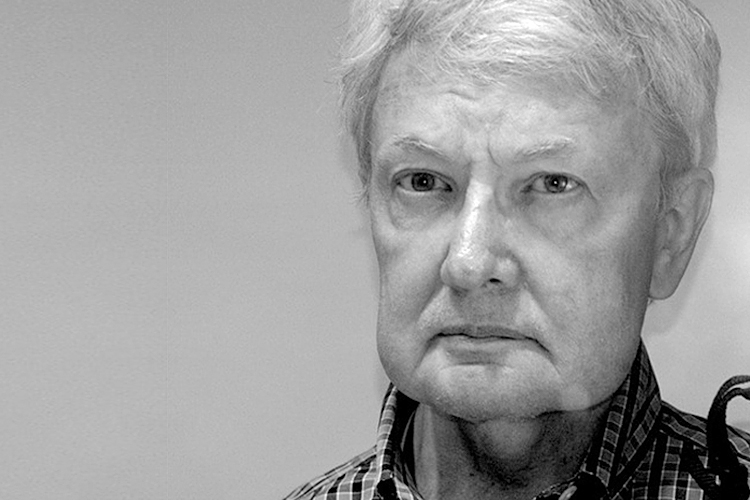
By Roger Ebert
(1942-2013)
salon

roger_ebert2

I know it is coming, and I do not fear it, because I believe there is nothing on the other side of death to fear. I hope to be spared as much pain as possible on the approach path. I was perfectly content before I was born, and I think of death as the same state. I am grateful for the gifts of intelligence, love, wonder and laughter. You can’t say it wasn’t interesting. My lifetime’s memories are what I have brought home from the trip. I will require them for eternity no more than that little souvenir of the Eiffel Tower I brought home from Paris.

I don’t expect to die anytime soon. But it could happen this moment, while I am writing. I was talking the other day with Jim Toback, a friend of 35 years, and the conversation turned to our deaths, as it always does. “Ask someone how they feel about death,” he said, “and they’ll tell you everyone’s gonna die. Ask them, In the next 30 seconds? No, no, no, that’s not gonna happen. How about this afternoon? No. What you’re really asking them to admit is, Oh my God, I don’t really exist. I might be gone at any given second.”

Me too, but I hope not. I have plans. Still, illness led me resolutely toward the contemplation of death. That led me to the subject of evolution, that most consoling of all the sciences, and I became engulfed on my blog in unforeseen discussions about God, the afterlife, religion, theory of evolution, intelligent design, reincarnation, the nature of reality, what came before the big bang, what waits after the end, the nature of intelligence, the reality of the self, death, death, death.

Many readers have informed me that it is a tragic and dreary business to go into death without faith. I don’t feel that way. “Faith” is neutral. All depends on what is believed in. I have no desire to live forever. The concept frightens me. I am 69, have had cancer, will die sooner than most of those reading this. That is in the nature of things. In my plans for life after death, I say, again with Whitman:

I bequeath myself to the dirt to grow from the grass I love,

If you want me again look for me under your boot-soles.

And with Will, the brother in Saul Bellow’s “Herzog,” I say, “Look for me in the weather reports.”

Raised as a Roman Catholic, I internalized the social values of that faith and still hold most of them, even though its theology no longer persuades me. I have no quarrel with what anyone else subscribes to; everyone deals with these things in his own way, and I have no truths to impart. All I require of a religion is that it be tolerant of those who do not agree with it. I know a priest whose eyes twinkle when he says, “You go about God’s work in your way, and I’ll go about it in His.”

What I expect to happen is that my body will fail, my mind will cease to function and that will be that. My genes will not live on, because I have had no children. I am comforted by Richard Dawkins’ theory of memes. Those are mental units: thoughts, ideas, gestures, notions, songs, beliefs, rhymes, ideals, teachings, sayings, phrases, clichés that move from mind to mind as genes move from body to body. After a lifetime of writing, teaching, broadcasting and telling too many jokes, I will leave behind more memes than many. They will all also eventually die, but so it goes.

O’Rourke’s had a photograph of Brendan Behan on the wall, and under it this quotation, which I memorized:

I respect kindness in human beings first of all, and kindness to animals. I don’t respect the law; I have a total irreverence for anything connected with society except that which makes the roads safer, the beer stronger, the food cheaper and the old men and old women warmer in the winter and happier in the summer.

That does a pretty good job of summing it up. “Kindness” covers all of my political beliefs. No need to spell them out. I believe that if, at the end, according to our abilities, we have done something to make others a little happier, and something to make ourselves a little happier, that is about the best we can do. To make others less happy is a crime. To make ourselves unhappy is where all crime starts. We must try to contribute joy to the world. That is true no matter what our problems, our health, our circumstances. We must try. I didn’t always know this and am happy I lived long enough to find it out.

One of these days I will encounter what Henry James called on his deathbed “the distinguished thing.” I will not be conscious of the moment of passing. In this life I have already been declared dead. It wasn’t so bad. After the first ruptured artery, the doctors thought I was finished. My wife, Chaz, said she sensed that I was still alive and was communicating to her that I wasn’t finished yet. She said our hearts were beating in unison, although my heartbeat couldn’t be discovered. She told the doctors I was alive, they did what doctors do, and here I am, alive.

Do I believe her? Absolutely. I believe her literally — not symbolically, figuratively or spiritually. I believe she was actually aware of my call and that she sensed my heartbeat. I believe she did it in the real, physical world I have described, the one that I share with my wristwatch. I see no reason why such communication could not take place. I’m not talking about telepathy, psychic phenomenon or a miracle. The only miracle is that she was there when it happened, as she was for many long days and nights. I’m talking about her standing there and knowing something. Haven’t many of us experienced that? Come on, haven’t you? What goes on happens at a level not accessible to scientists, theologians, mystics, physicists, philosophers or psychiatrists. It’s a human kind of a thing.

Someday I will no longer call out, and there will be no heartbeat. I will be dead. What happens then? From my point of view, nothing. Absolutely nothing. All the same, as I wrote to Monica Eng, whom I have known since she was six, “You’d better cry at my memorial service.” I correspond with a dear friend, the wise and gentle Australian director Paul Cox. Our subject sometimes turns to death. In 2010 he came very close to dying before receiving a liver transplant. In 1988 he made a documentary named “Vincent: The Life and Death of Vincent van Gogh.” Paul wrote me that in his Arles days, van Gogh called himself “a simple worshiper of the external Buddha.” Paul told me that in those days, Vincent wrote:

Looking at the stars always makes me dream, as simply as I dream over the black dots representing towns and villages on a map.

Why, I ask myself, shouldn’t the shining dots of the sky be as accessible as the black dots on the map of France?

Just as we take a train to get to Tarascon or Rouen, we take death to reach a star. We cannot get to a star while we are alive any more than we can take the train when we are dead. So to me it seems possible that cholera, tuberculosis and cancer are the celestial means of locomotion. Just as steamboats, buses and railways are the terrestrial means.

To die quietly of old age would be to go there on foot.

That is a lovely thing to read, and a relief to find I will probably take the celestial locomotive. Or, as his little dog, Milou, says whenever Tintin proposes a journey, “Not by foot, I hope!”

Who asks nothing but to follow in his footsteps, by clear and endurable ways

I have demanded certain movements of my legs and even feet. I know them well and could feel the effort they made to obey. I have lived with them that little space of time, filled with drama, between the message received and the piteous response. To old dogs the hour comes when, whistled by their master setting forth with his stick at dawn, they cannot spring after him. Then they stay in their kennel, or in their basket, though they are not chained, and listen to the steps dying away. The man too is sad. But soon the pure air and the sun console him, he thinks no more about his old companion, until evening. The lights in his house bid him welcome home and a feeble barking makes him say, It is time I had him destroyed. There’s a nice passage. Soon it will be even better, soon things will be better.

— Samuel Beckett, Malone Dies

Our laughing neighbor

Truly being here is glorious. Even you knew it,
you girls who seemed to be lost, to go under –, in the filthiest
streets of the city, festering there, or wide open
for garbage. For each of you had an hour, or perhaps
not even an hour, a barely measurable time
between two moments –, when you were granted a sense
of being. Everything. Your veins flowed with being.
But we can so easily forget what our laughing neighbor
neither confirms nor envies. We want to display it,
to make it visible, though even the most visible happiness
can’t reveal itself to us until we transform it, within.

— Rainer Maria Rilke, The Seventh Duino Elegy,
translated by Stephen Mitchell

I am struck by this: “But we can so easily forget what our laughing neighbor / neither confirms nor envies.” What about these “laughing neighbors”? Surely we have all had the experience of having an intensely inward perception deflated within us by some non-reaction of the world, by pure indifference. (Disputatious rage or a kind of clock-minded logic — e.g., the “New Atheists” — is easier to take. Equally useless in terms of understanding and preserving your experience, but easier to ignore and move away from.) But the other, the laughing neighbor, this wounds us, and it does so because every genuine impulse of inwardness contains a little propulsion back toward the world and other people. In fact, as I’ve said, this is how you ascertain the truth of spiritual experience: it propels you back toward the world and other people, and not simply more deeply within yourself. This blankness of faith, this indifference that doesn’t even reach the level of resistance, it is simply one of those weakening influences that we must push through. And without ego, without thinking ourselves superior, for we don’t know all the ways in which God manifests himself or why some people in our lives, even some whom we most love, seem immune to inwardness. Perhaps we are the weak ones, and God comes to us inwardly only because we have failed to perceive him in the crying child, in the nail driven cleanly into the wood, in the ordinary dawn sun that merely to see clearly is sufficient prayer and praise.

— Christian Wiman, My Bright Abyss

The comprehensible slips away, is transformed; instead of possession one learns relationship, and there arises a namelessness that must begin once more in our relations with God if we are to be complete and without evasion. The experience of feeling him recedes behind an infinite delight in everything that can be felt; all attributes are taken away from God, who is no longer sayable, and fall back into creation, into love and death.

— Rainer Maria Rilke,
in a letter to Ilse Jake

I don’t like those gull’s eyes

I don’t like those gull’s eyes. They remind me of an old shipwreck, I forget which. I know it is a small thing. But I am easily frightened now. I know those little phrases that seem so innocuous and, once you let them in, pollute the whole of speech. Nothing is more real than nothing. They rise up out of the pit and know no rest until they drag you down into its dark. But I am on my guard now.

Then he was sorry he had not learnt the art of thinking, beginning by folding back the second and third fingers the better to put the index on the subject and the little finger on the verb, in the way his teacher had shown him, and sorry he could make no meaning of the babel raging in his head, the doubts, desires, imaginings and dreads. And a little less well endowed with strength and courage he too would have abandoned and despaired of ever knowing what manner of being he was, and how he was going to live, and lived vanquished, blindly, in a mad world, in the midst of strangers.

— Samuel Beckett, Malone Dies

Long Hidden, Vatican Painting Linked To Native Americans

By Sylvia Poggioli
npr

vatican-fresco


For close to 400 years, the painting was closed off to the world. For the past 124 years, millions of visitors walked by without noticing an intriguing scene covered with centuries of grime.

Only now, the Vatican says a detail in a newly cleaned 15th century fresco shows what may be one of the first European depictions of Native Americans.

vatican-5-3-13

The fresco, The Resurrection, was painted by the Renaissance master Pinturicchio in 1494 — just two years after Christopher Columbus first set foot in what came to be called the New World.

Antonio Paolucci, director of the Vatican Museums, told the Vatican daily L’Osservatore Romano that after the soot and grime were removed, in the background, just above the open coffin from where Christ has risen, “we see nude men, decorated with feathered headdresses who appear to be dancing.” One of them seems to sport a Mohican cut.

The image dovetails with Columbus’ description of having been greeted by dancing nude men painted black or red.

Commissioned By The Pope

The painting was commissioned by Pope Alexander VI. Anyone who has followed the TV seriesThe Borgias knows he was the infamous Rodrigo Borgia, a Spaniard who fathered several children and became a symbol of church corruption.

Alexander VI became pope in 1492, only a few months before Columbus made landfall.

Art historian Paolucci is convinced the entire Pinturicchio fresco cycle for the Borgia Apartments inside the Vatican had been completed by the end of 1494.

“The Borgia pope was interested in the New World, as were the great chancelleries of Europe,” Paolucci told L’Osservatore Romano.

Columbus’ four trips to the New World were financed by the Spanish royals Ferdinand and Isabella.

On his return to Spain in March 1493 from his first journey, Columbus handed over his travel journal to the sovereigns who, according to Paolucci, had every interest in keeping it secret.

A Secret That Spread Quickly

But word of Columbus’ sensational discovery soon spread throughout Europe.

“It is hard to believe,” Paolucci said, “that the Borgia papal court would be unaware of what Columbus saw when he reached the ends of the earth.”

Hence, the art historian believes, the dancing figures in Pinturicchio’s Resurrection could be “the first depiction of Native Americans.”

The Borgia pope’s links to the New World do not end there.

Alexander VI played a key role in determining how history would play out in what would become The Americas and who would reap the benefits: While Pinturicchio was painting his cycle, Alexander was busy drafting the Tordesillas treaty of June 1494 that divided up the newly discovered territories between the two major naval powers of the time, Spain and Portugal.

One can’t help but imagine Alexander pondering the implications of Columbus’ discovery while Pinturicchio was concentrating on his brush strokes on the fresh plaster of the Vatican walls.

Pope Alexander has a prominent position in the painting — he’s the large figure in ornate robes kneeling on the left, his hands clasped in prayer.

But it’s not clear whether he’s more transfixed by the image of the risen Christ or by the potential spoils of the New World, represented by the nude dancing figures.

Until now, it was believed that the first known European depictions of Native Americans were those of the British artist John White, who was governor of the colony at Roanoke Island.

But he wasn’t even born until nearly half a century after the discovery of the New World.

Pinturicchio’s nude figures remained forgotten because the Borgia Apartments were sealed off after Pope Alexander’s death in 1503. His successor, Julius II, said he would never live in the rooms of the pope who had so tainted the church’s reputation. And Julius ordered that all paintings made for the Borgias be covered in black crepe.

It was not until 1889 that the Borgia Apartments were reopened and dedicated to the display of religious art.

Ultraviolet light reveals how ancient Greek statues really looked

By Esther Inglis-Arkell
io9

ku-xlarge

Original Greek statues were brightly painted, but after thousands of years, those paints have worn away. Find out how shining a light on the statues can be all that’s required to see them as they were thousands of years ago.

Although it seems impossible to think that anything could be left to discover after thousands of years of wind, sun, sand, and art students, finding the long lost patterns on a piece of ancient Greek sculpture can be as easy as shining a lamp on it. A technique called ‘raking light’ has been used to analyze art for a long time. A lamp is positioned carefully enough that the path of the light is almost parallel to the surface of the object. When used on paintings, this makes brushstrokes, grit, and dust obvious. On statues, the effect is more subtle. Brush-strokes are impossible to see, but because different paints wear off at different rates, the stone is raised in some places – protected from erosion by its cap of paint – and lowered in others. Elaborate patterns become visible.

Ultraviolet is also used to discern patterns. UV light makes many organic compounds fluoresce. Art dealers use UV lights to check if art has been touched up, since older paints have a lot of organic compounds and modern paints have relatively little. On ancient Greek statues, tiny fragments of pigment still left on the surface glow bright, illuminating more detailed patterns.

Ultraviolet light reveals how ancient Greek statues really looked

Once the pattern is mapped, there is still the problem of figuring out which paint colors to use. A series of dark blues will create a very different effect than gold and pink. Even if enough pigment is left over so that the naked eye can make out a color, a few thousand years can really change a statue’s complexion. There’s no reason to think that color seen today would be anything like the hues the statues were originally painted.

There is a way around this dilemma. The colors may fade over time, but the original materials – plant and animal-derived pigments, crushed stones or shells – still look the same today as they did thousands of years ago. This can also be discovered using light.

Ultraviolet light reveals how ancient Greek statues really looked

Infrared and X-ray spectroscopy can help researchers understand what the paints are made of, and how they looked all that time ago. Spectroscopy relies on the fact that atoms are picky when it comes to what kind of incoming energy they absorb. Certain materials will only accept certain wavelengths of light. Everything else they reflect. Spectroscopes send out a variety of wavelengths, like scouts into a foreign land. Inevitably, a few of these scouts do not come back. By noting which wavelengths are absorbed, scientists can determine what materials the substance is made of. Infrared helps determine organic compounds. X-rays, because of their higher energy level, don’t stop for anything less than the heavier elements, like rocks and minerals. Together, researchers can determine approximately what color a millennia-old statue was painted.

The color? Always something tacky.

To be innocent

To be innocent is to retain that space in your heart that once heard a still, small voice saying not your name so much as your nature, and the wherewithal to say again and forever your wordless but lucid, your untriumphant but absolute, yes. You must protect this space so that it can protect you. You must carry it with you through whatever milieu in which you find yourself growing too comfortable: the seductive assurance and instant contempt of secularism, the hive-like certainties of churches, the mental mazes of theology, the professional vale of soul making that a life in literature can become. Something in you must remain in you, voiceless even as you voice your deepest faith, doubt, fear, dreams . . .

— Christian Wiman, My Bright Abyss