The disquieting schoolgirl

Another peal of childish laughter broke out in the kitchen. Lady Hamilton at sixteen sounded as though she were about eleven. And yet how mature, how technically perfect had been the look with which she greeted Bob! Obviously, the most disquieting fact about Rosie was that she was simultaneously innocent and knowing, a calculating adventuress and a pigtailed schoolgirl.

— Aldous Huxley, Ape and Essence

To copy oneself

Success is dangerous. One begins to copy oneself, and to copy oneself is more dangerous than to copy others. It leads to sterility.

— Pablo Picasso
Forbes Quotes

Dear Borges

13 June 1996 New York

Dear Borges,

Since your literature was always placed under the sign of eternity, it doesn’t seem too odd to be addressing a letter to you. (Borges, it’s 10 years!) If ever a contemporary seemed destined for literary immortality, it was you. You were very much the product of your time, your culture, and yet you knew how to transcend your time, your culture, in ways that seem quite magical. This had something to do with the openness and generosity of your attention. You were the least egocentric, the most transparent of writers, as well as the most artful. It also had something to do with a natural purity of spirit. Though you lived among us for a rather long time, you perfected practices of fastidiousness and of detachment that made you an expert mental traveller to other eras as well. You had a sense of time that was different from other people’s. The ordinary ideas of past, present and future seemed banal under your gaze. You liked to say that every moment of time contains the past and the future, quoting (as I remember) the poet Browning, who wrote something like, “the present is the instant in which the future crumbles into the past.” That, of course, was part of your modesty: your taste for finding your ideas in the ideas of other writers.

Your modesty was part of the sureness of your presence. You were a discoverer of new joys. A pessimism as profound, as serene, as yours did not need to be indignant. It had, rather, to be inventive – and you were, above all, inventive. The serenity and the transcendence of self that you found are to me exemplary. You showed that it is not necessary to be unhappy, even while one is clear-eyed and undeluded about how terrible everything is. Somewhere you said that a writer – delicately you added: all persons – must think that whatever happens to him or her is a resource. (You were speaking of your blindness.)

You have been a great resource, for other writers. In 1982 – that is, four years before you died – I said in an interview, “There is no writer living today who matters more to other writers than Borges. Many people would say he is the greatest living writer… Very few writers of today have not learnt from him or imitated him.” That is still true. We are still learning from you. We are still imitating you. You gave people new ways of imagining, while proclaiming over and over our indebtedness to the past, above all, to literature. You said that we owe literature almost everything we are and what we have been. If books disappear, history will disappear, and human beings will also disappear. I am sure you are right. Books are not only the arbitrary sum of our dreams, and our memory. They also give us the model of self-transcendence. Some people think of reading only as a kind of escape: an escape from the “real” everyday world to an imaginary world, the world of books. Books are much more. They are a way of being fully human.

I’m sorry to have to tell you that books are now considered an endangered species. By books, I also mean the conditions of reading that make possible literature and its soul effects. Soon, we are told, we will call up on “bookscreens” any “text” on demand, and will be able to change its appearance, ask questions of it, “interact” with it. When books become “texts” that we “interact” with according to criteria of utility, the written word will have become simply another aspect of our advertising-driven televisual reality. This is the glorious future being created, and promised to us, as something more “democratic”. Of course, it means nothing less then the death of inwardness – and of the book.

This time around, there will be no need for a great conflagration. The barbarians don’t have to burn the books. The tiger is in the library. Dear Borges, please understand that it gives me no satisfaction to complain. But to whom could such complaints about the fate of books – of reading itself – be better addressed than to you? (Borges, it’s 10 years!) All I mean to say is that we miss you. I miss you. You continue to make a difference. The era we are entering now, this 21st century, will test the soul in new ways. But, you can be sure, some of us are not going to abandon the Great Library. And you will continue to be our patron and our hero.

— Susan Sontag, Where the Stress Falls

Shown to me by the friendly neighborhood Jehovah’s Witnesses…

I am the LORD your God,
who teaches you what is best for you,
who directs you in the way you should go.
18 If only you had paid attention to my commands,
your peace would have been like a river,
your well-being like the waves of the sea.

— Isaiah 48.17, NIV

Words are flowing out like endless rain into a paper cup: Beatles critics across the decades

Critics can pick a fight over anything, even artists who have received nearly universal acclaim, like Mozart, Shakespeare and…the Beatles. Herewith a list of sharply dissenting views on the Fab Four.

Guitar groups are on the way out…the Beatles have no future in show business.

—Dick Rowe, head of Decca Records, 1962

[BEATLES1]Sean Connery, 1964

Drinking Dom Perignon ’53 above the temperature of 38 degrees” is “as bad as listening to the Beatles without earmuffs.

—James Bond, secret agent in “Goldfinger,” 1964

The noise was deafening throughout and I couldn’t hear a word they sang or a note they played, just one long ear-splitting din.

—Noel Coward, British composer and playwright, summarizing a Beatles concert in 1964

[BEATLES2]William F. Buckley Jr.

The Beatles are not merely awful, I would consider it sacrilegious to say anything less than that they are godawful. They are so unbelievably horrible, so appallingly unmusical, so dogmatically insensitive to the magic of the art, that they qualify as crowned heads of anti-music.

—William F. Buckley, author and commentator, 1964

Musically, they are a near disaster; guitars slamming out a merciless beat that does away with secondary rhythms, harmony and melody. Their lyrics (punctuated by nutty shouts of “yeah, yeah, yeah!”) are a catastrophe, a preposterous farrago of Valentine-card romantic sentiments.

—Newsweek reviewer, Feb. 24, 1964

[BEATLES3]David Susskind

The most repulsive group of men I’ve ever seen.

—David Susskind, American TV host, 1965

My teacher always talks about the Beatles but they have no lyrical skills, my cousin Rodney is a better songwriter than these clowns. I think they should remix these songs with 50 Cent or Snoop, then they’d really get some fans behind them.

—Amazon customer review, 2005

BEATLES4

The Beatles performing at the Prince of Wales Theatre.

The Beatles are the absolute curse of modern indie music… my favorite Beatle is Yoko Ono; without Yoko’s influence I don’t think there would be any Beatles music I could listen to.

—David Keenan, author and music critic, 2009

…why making records on drugs isn’t always a good idea and why you shouldn’t let Ringo sing… if not the worst, then certainly the most overrated album of all time.

—Richard Smith, reviewing “Sgt. Pepper’s Lonely Hearts Club Band,” 2007

[BEATLES5]Elvis Presley

The Beatles laid the groundwork for many of the problems we are having with young people by their filthy unkempt appearances and suggestive music while entertaining in this country during the early and middle 1960s.

—Elvis Presley, as recorded by an FBI memo, during a 1970 visit to Richard Nixon at the White House and FBI headquarters

‘Love Me Do’…a melody so weepingly banal it sounds like a fingering exercise for primary-school recorder practice.

—Michael Deacon, music critic, 2009

wsj

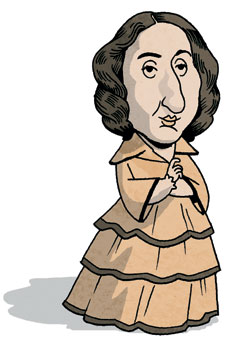
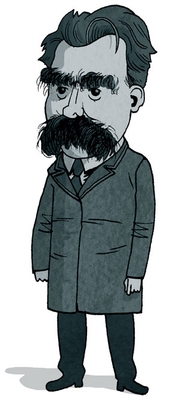
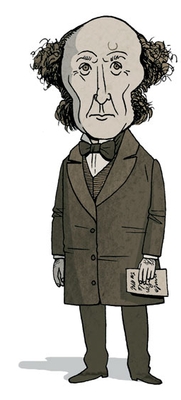
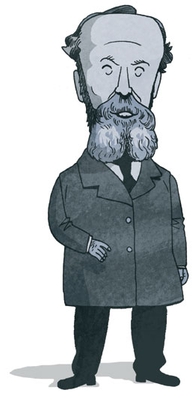
Varieties of Irreligious Experience: atheism through the ages

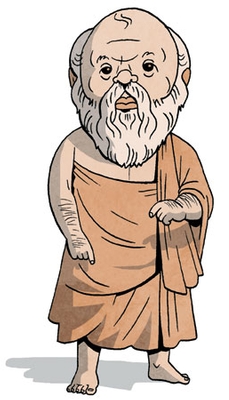
Socrates

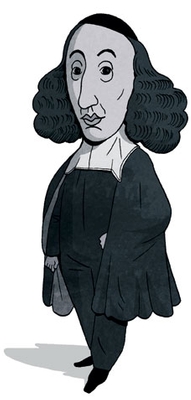
Baruch Spinoza

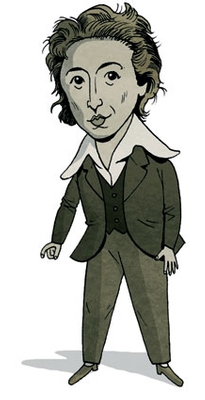
Percy Bysshe Shelley

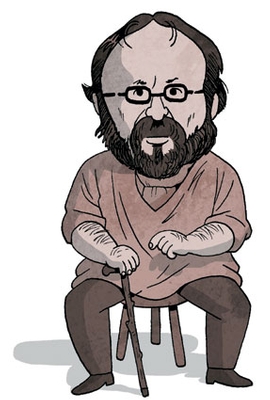
Pierre-Joseph Proudhon

George Eliot

Friedrich Nietzsche

John Stuart Mill

William James

— newhumanist.org.uk,

Scott Garrett


Mmmmm… Bananas…

With a clattering of chairs, upended shell cases, benches, and ottomans, Pirate’s mob gather at the shores of the great refectory table, a southern island well across a tropic or two from chill Corydon Throsp’s mediaeval fantasies, crowded now over the swirling dark grain of its walnut uplands with banana omelets, banana sandwiches, banana casseroles, mashed bananas molded in the shape of a British lion rampant, blended with eggs into batter for French toast, squeezed out a pastry nozzle across the quivering creamy reaches of a banana blancmange to spell out the words C’est magnifique, mais ce n’est pas la guerre (attributed to a French observer during the Charge of the Light Brigade) which Pirate has appropriated as his motto . . . tall cruets of pale banana syrup to pour oozing over banana waffles, a giant glazed crock where diced bananas have been fermenting since the summer with wild honey and muscat raisins, up out of which, this winter morning, one now dips foam mugsfull of banana mead . . . banana croissants and banana kreplach, and banana oatmeal and banana jam and banana bread, and bananas flamed in ancient brandy Pirate brought back last year from a cellar in the Pyrenees also containing a clandestine radio transmitter . . .

. . . Pirate takes up a last dipper of mead, feels it go valving down his throat as if it’s time, time in its summer tranquility, he swallows.

— Thomas Pynchon, Gravity’s Rainbow


Another great first sentence

For the awarding of the Grillparzer Prize of the Academy of Sciences in Vienna I had to buy a suit, as I had suddenly realized two hours before the presentation that I couldn’t appear at this doubtless extraordinary ceremony in trousers and a pullover, and so I had actually made the decision on the so-called Graben to go to the Kohlmarkt and outfit myself with appropriate formality, to which end, based on previous shopping for socks on several occasions, I picked the best-known gentleman’s outfitters with the descriptive name Sir Anthony, if I remember correctly it was nine forty-five when I went into Sir Anthony’s salon, the award ceremony for the Grillparzer Prize was at eleven, so I had plenty of time.

— Thomas Bernhard, My Prizes

Depression is not the soul’s annihilation

If our lives had no other configuration but this, we should want, and perhaps deserve, to perish; if depression had no termination, then suicide would, indeed, be the only remedy. But one need not sound the false or inspirational note to stress the truth that depression is not the soul’s annihilation; men and women who have recovered from the disease — and they are countless — bear witness to what is probably its only saving grace: it is conquerable.

For those who have dwelt in depression’s dark wood, and known its inexplicable agony, their return from the abyss is not unlike the ascent of the poet, trudging upward and upward out of hell’s black depths and at last emerging into what he saw as “the shining world.” There, whoever has been restored to health has almost always been restored to the capacity for serenity and joy, and this may be indemnity enough for having endured the despair beyond despair.

E quindi uscimmo a riveder le stelle.

And so we came forth, and once again beheld the stars.

— William Styron, Darkness Visible: A Memoir of Madness

What would a nonexpressive poetry look like? A poetry of intellect rather than emotion?

What would a nonexpressive poetry look like? A poetry of intellect rather than emotion? One in which the substitutions at the heart of metaphor and image were replaced by the direct presentation of language itself, with “spontaneous overflow” supplanted by meticulous procedure and exhaustively logical process? In which the self-regard of the poet’s ego were turned back onto the self-reflexive language of the poem itself? So that the test of poetry were no longer whether it could have been done better (the question of the workshop), but whether it could conceivably have been done otherwise.

Craig Dworkin